Friday, September 10, 2021

Thursday, September 9, 2021
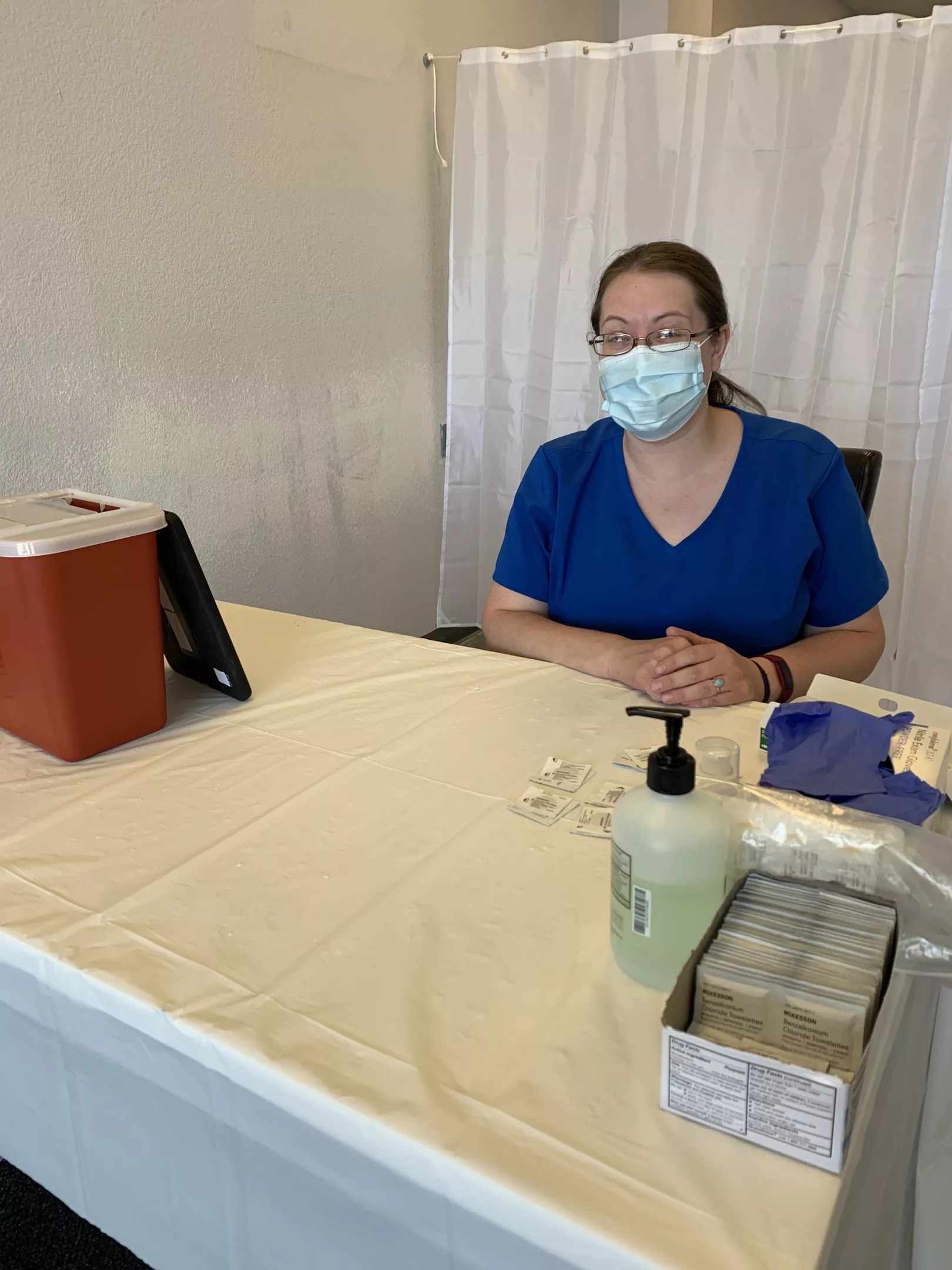
Health officials urged people to get the flu vaccine in response to unexpectedly high cases of seasonal illness.
Pima County has two "mu variant" COVID cases and 150 influenza cases, said County Public Health Director Dr. Theresa Cullen at a press conference on Wednesday.
Cullen said "mu" has been deemed a “variant of interest” by the Centers for Disease Control. The Delta variant is the most prolific variant in the United States and is labeled a “variant of concern” by the CDC.
Cullen qualified the number flu cases, saying the number is probably higher because most people won’t get tested and will get treatment before a case can be reported.
“As we enter this flu season, we remain concerned that we will see an acceleration of the cases compared with last year, it's important for people to remember that you could get COVID and influenza at the same time,” Cullen said.
She recommended that Pima County residents get COVID and flu vaccines in the next two months to prepare for winter viruses. Flu vaccines are readily available throughout Tucson at local pharmacies and grocery stores.
Parents should also be aware of the respiratory syncytial virus. Chief Clinical Officer Dr. Marjorie Bessel at Banner Health said RSV hospitalizations and ER visits have increased rapidly in the past four days.
“As a reminder, this is an unseasonable spike. Typically, RSV is not a big concern during summer months,” Bessel said.
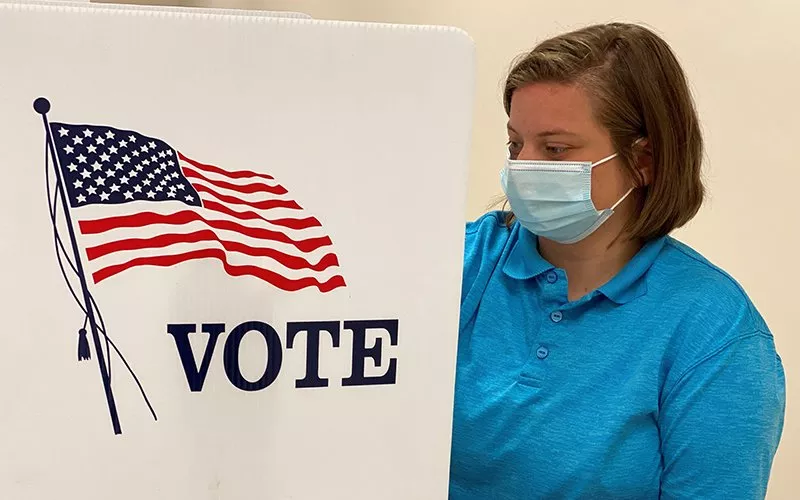
A strong majority of Arizona voters — but only a small fraction of Republicans — support face mask mandates and vaccine requirements in schools and government buildings to combat the spread of COVID-19, according to a new poll commissioned by organizations representing school boards and public health professionals.
In the live-caller poll of 400 voters deemed likely to vote in next year’s general election, 57% of respondents said people should definitely or probably be required to wear face masks in local government facilities, and public schools. Nearly 41% said people should not be required to wear masks in those settings.
And 53% of respondents said those institutions should also be allowed to determine their own policies on face mask mandates, compared to nearly 43% who said they shouldn’t.
The poll was conducted by the Republican lobbying and political consulting firm HighGround on Aug. 30 and 31.
A new state law that goes into effect on Sept. 29 prohibits district and charter schools from requiring face masks. Several education and other advocacy groups, including the Arizona School Boards Association, which commissioned the poll, are challenging that law in court.
Voters took a similar view of vaccine mandates. Nearly 54% said private businesses should be able to require employees to show proof of vaccination against COVID-19, while 42% said employers shouldn’t be permitted to do that. And more than 52% said local governments and public schools should be able to impose that requirement, compared to nearly 45% who said they shouldn’t have that power.

Wednesday, September 8, 2021
The Pima County Board of Supervisors passed multiple policies meant to curb the spread of COVID in Pima County on Tuesday, Sept. 7.
Supervisor Heinz withdrew his proposal to require all healthcare workers in Pima County to be vaccinated against COVID. The Board received multiple letters and public comments in opposition to the proposed mandate.
But the Board of Supervisors voted 4-1, with Supervisor Steve Christy opposed, to pass disincentives for unvaccinated employees.
Disincentives will include mandatory weekly COVID testing, taking away healthy lifestyle discounts for employees’ healthcare plans, and an additional $25.51 pay period surcharge to employee healthcare plans.
“I’m against any type of disincentives for employees. I really think this is opening up liability to no end,” said Supervisor Christy, who warned disincentives could lead to a hostile work environment.
Supervisor Adelita Grijalva quickly responded to Christy’s concerns by saying disincentives and vaccinations foster a safe work environment. Grijalva said there are some employees who can’t receive the vaccine and they need to be protected as well. County employees can submit a vaccine exemption form for medical and religious purposes.
At its Aug. 16 meeting, supervisors passed incentives for employees to get vaccinated, including a $300 bonus and three paid days off.
Huckelberry said there has been an increase in county employee vaccinations since the incentives passed. Only 43% of county employees were vaccinated before the incentives were enacted and employee vaccinations have now risen to 66% since Aug. 16.
Supervisor Grijalva said she was worried only 30% of the Sheriff’s Department is vaccinated.
Supervisor Rex Scott asked Pima County Administrator Chuck Huckelberry to create an anonymous survey of the remaining employees who may be vaccine-hesitant or resistant.
“This board voted not to mandate vaccines, but if we are going to put incentives and disincentives in place and neither of those are having the desired effect on the vaccine-hesitant or resistance, we as a board need to know the reasons why,” Scott said.
Board provides funding to domestic violence prevention
The Board unanimously passed a resolution to provide the Emerge! Center Against Domestic Abuse emergency shelter with $1 million to double their shelter capacity.
The Emerge! Center Against Domestic Abuse combats domestic violence in Pima County by providing services and shelters to individuals who live in abusive environments.
If you’ve had trouble paying for prescription medicine for yourself or family members — regardless if you are insured or not — you aren’t alone. Americans pay three times more for medications than people in other countries. As the cost of lifesaving medications like insulin skyrocket, Arizonans face impossible tradeoffs, like deciding whether to pay rent or to purchase the medications that keep them alive.
The COVID-19 pandemic has further laid bare the inequities in our health system, and now more than ever, we must be working together to lower health care costs for everyone. Particularly, we must focus on communities disproportionately impacted by the high cost of drugs: Seniors, women, communities of color, and even children are especially vulnerable to these skyrocketing costs.
It doesn’t always have to be this way. The US has historically emphasized patent exclusivity as an incentive to drug makers. This tilts the table heavily in the favor of drug companies, which essentially maintain monopolies on popular drugs for extended periods of time. While it is important to foster competition to promote innovation, the current system is having the opposite effect. Individual consumers often have no alternative drug choice, and even when multiple options are available, it may be the insurer rather than the patient and physician who make the ultimate decision about which medication is best for the patient.
It is not uncommon in my emergency medicine practice to see patients who are struggling to pay for medications. In some cases, they personally try and “prioritize” which medications they can afford to take and which they cannot. In the worst case, this might mean a patient taking no medications at all for extended periods of time.
The net effect is patients who are sicker than they have to be, with poorly controlled diseases. For a diabetic patient, this might mean the difference between manageable foot care and an amputation due to difficulties with blood sugar control. For a patient with heart or vascular disease, not “prioritizing” their anticoagulant (blood-thinning) medications can result in stent occlusion (blockage) and a recurring heart attack or loss of limb. And whether patients make better or worse guesses about which medications to prioritize, the reality is their doctors would not prescribe medications that are not necessary, so any trade-off is a gamble on future health.
Working to lower the cost of prescription drugs is more than just the right thing to do — it's overwhelmingly popular with voters across the political spectrum. A January 2021 Morning Consult poll found that 96% of voters said lowering drug prices is an important challenge facing Americans. Despite countless promises to take action, for four long years, former President Trump and his Republican allies in Congress blocked proposed Democratic reform addressing this very issue at every turn. Instead, they rewarded Big Pharma companies — and their CEOs — with record profits.
In his first address to the Joint Session of Congress, President Biden struck a markedly different tone: “Let’s give Medicare the power to save hundreds of billions of dollars by negotiating lower drug prescription prices,” he said. “Let’s do it now.” Democrats in the House of Representatives are following his lead.
In late April, House Democrats reintroduced H.R.3, the Elijah E. Cummings Lower Drug Costs Now Act. This bill would allow Medicare to negotiate lower prices on behalf of all Americans — not just those on Medicare — which is the single most effective way to reduce drug prices. It also establishes strong protections against price gouging and redirects more funding to the National Institutes of Health (NIH) for life-saving research and development. Finally, H.R.3 would also penalize drug companies that increase prices faster than the rate of inflation, a shockingly common practice.
Insights from a Gallup survey show the American public supports the provisions in H.R.3 meant to lower the cost of prescription drugs. Separate polling conveys that 93% of respondents — Democrats, Republicans, and independents alike — support giving Medicare the power to negotiate with drug companies for lower prices.
It’s horrifying to know there are Arizonans who ration their medications or delay care because the costs are too high. Legislation like H.R.3 would help change that reality for millions of people and reform is long overdue. With President Biden’s support, we can get this done. Now is the time for Congress to take bold action and pass this bill.

State Sen. Kirsten Engel, a Democrat who represents midtown and east Tucson, announced today that she was resigning her Legislative District 10 seat in the Arizona Legislature to focus on her congressional campaign.
“After much consideration, I have decided to step down from the State Senate to fully commit my time, energy, and focus to my campaign to continue to serve the people of Southern Arizona in the US Congress. Arizona’s 2nd Congressional District is an open seat that will be key to maintaining our Democratic House majority in 2022, and this is not an endeavor to be taken lightly. I know how much work it will take to win this district, and I’m ready to take on that challenge whole-heartedly."
Engel is seeking to replace the retiring U.S. Rep. Ann Kirkpatrick, a Democrat who announced earlier this year she would not seek reelection.
Two other Democrats, state Rep. Daniel Hernandez and political rookie Marco Urrea, are also seeking the seat.
Republican Juan Ciscomani recently has announced he would run for the office.
State Rep. Randy Friese said last week that he was dropping out of the congressional race.
While CD2 now includes Tucson, the Catalina Foothills, the Casas Adobes area and Cochise County, the district's boundaries is scheduled to be redrawn by the Arizona Independent Redistricting Commission before the 2022 election.
Engel's resignation is effective today. LD10 precinct committee members will vote on a slate of three candidates and then the Pima County Board of Supervisors will select her replacement.
LD10 Rep. Stephanie Stahl-Hamilton has already announced her plans to seek Engel's seat in 2022. The other LD10 House member, Rep. Domingo DeGrazia, recently announced he would not seek reelection next year, setting up two open House seats in the district—which will also be redrawn by the Independent Redistricting Commission.
Engel's full statement is below the jump.

WASHINGTON – Federal regulators on Friday rejected a mining company’s request to reduce critical habitat for endangered jaguars in the Santa Rita Mountains on land that overlaps the footprint of the proposed Rosemont Copper Mine.
The decision by the U.S. Fish and Wildlife Service is the latest setback for Hudbay Minerals Inc., which has been working for more than a decade to get permission to open the mine that it says could create thousands of jobs and bring billions in economic development to the region.
But opponents welcomed the decision, saying the mine threatens not just the jaguar but the area’s drinking water supply.
“The people of Tucson have shown very clearly that they value jaguars and their water security more than they value this foreign company coming in here to put an open-pit copper mine in our mountains,” said Randy Serraglio, the Southwest conservation advocate at the Center for Biological Diversity.
In an emailed statement Friday, a Hudbay representative said the Canadian-based mining company is reviewing the Fish and Wildlife decision, but that it “remains committed to the development of the Rosemont Project.”
Hudbay claims that the mine would lead to the creation of 500 jobs directly related to the project and another 2,700 indirectly related, spinning off $48 million a year in state and local taxes and generating $1.4 billion a year in economic activity for the region.
The company also claims on its website that the proposed Rosemont mine has been the subject of more than 1,000 studies by 17 federal, state and local agencies over 11 years, and insists it will operate an “unprecedented environmental mitigation program” at the site.

Tuesday, September 7, 2021