
Sunday, June 20, 2021
Saturday, June 19, 2021
Friday, June 18, 2021
On June 19, 1865, Union soldiers marched into Galveston, Texas, and announced the end of the Civil War, two years after President Abraham Lincoln signed the Emancipation Proclamation into law, marking the end of slavery. On Thursday, Juneteenth became a federal holiday.
While symbolically meaningful, the nation continues to see police killings of Black people at higher rates than their white counterparts and higher rates of incarceration. Arizona and 22 other states have enacted laws or introduced bills banning critical race theory in schools. In order to learn more about the longest r
In its 50th anniversary celebrating Black history and culture, the Tucson Juneteenth Festival will host several events, including:
Our Black is Beautiful, a virtual event hosted by Pima Community College and the Tucson Juneteenth Committee
- Saturday, June 19, 11 a.m. - 1 p.m. and 9-10 p.m. Join the event here.
Tucson Juneteenth Festival, an in-person event with festival vendors and food
- Saturday, June 19, 4-6 p.m., Dunbar Pavilion, 325 W. 2nd St.
Other events include:
- Films 4 US: Juneteenth Celebration 2021, a screening of "Buck Breaking," a new documentary from the producers of the Hidden Colors Documentary Series about the impact of slavery on the minds of those subject to it.
- Friday, June 18, 7-10 p.m., The Screening Room, 127 E. Congress St.
- $20. $5 from each ticket donated to the Tucson Juneteenth Festival Committee.
- Visit the event website for more information

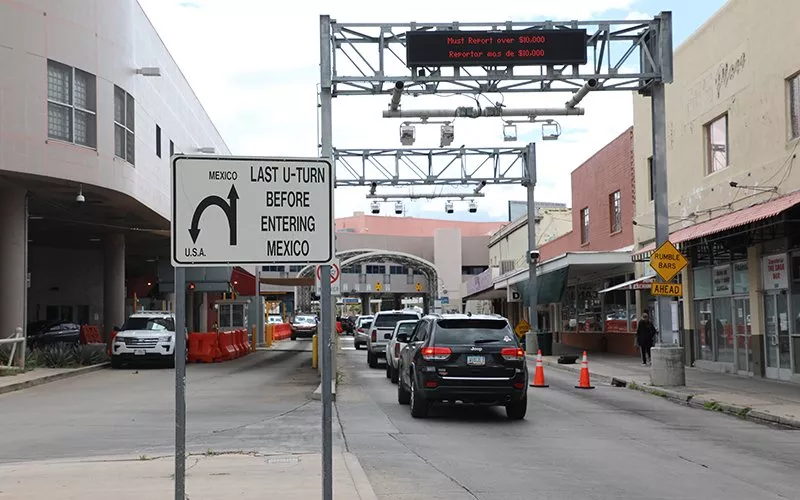
WASHINGTON – Border officials urged lawmakers to stick to a plan to reopen the border to nonessential travel Monday, even as they said more needs to be done to prepare for the expected surge in traffic.
The travel restriction was first imposed in March 2020 because of COVID-19 and has been regularly extended since, with the latest extension through 11:59 p.m. Monday. It was not clear if it will be extended again, but witnesses told a Senate Homeland Security subcommittee Wednesday that border communities cannot afford another delay in the reopening.
“I implore you to work with the White House in lifting border crossing restrictions for nonessential travel,” said Guillermo Valencia, who was testifying on behalf of the Greater Nogales and Santa Cruz County Port Authority.
“While these measures may have served an important role at critical times during the height of the pandemic, the continuation of these provisions are engendering the negative impacts on border economies,” he said.
Valencia testified that border crossings at Nogales are down by more than 46%, a drop that has “decimated” small businesses, restaurants, hotels and stores in the town.
But Valencia and others at the hearing also told senators on the Governmental Operations and Border Management Subcommittee that more workers and better technology will be needed at ports of entry to keep up with any increase in cross-border traffic once restrictions are lifted.
Anthony Reardon, president of the National Treasury Employees Union, said there is a staffing gap of more than 2,000 workers at Customs and Border Protection, which has seen no additional funding for hires since fiscal 2020. Even though border crossings fell during the pandemic, he said workers are stretched thin.
“If these essential travel restrictions are indeed lifted, I have heard from NTEU leaders that the current staffing at land ports will be unable to maintain inspection and processing functions to address the expected increase in traffic flow in a timely manner,” Reardon said.
A collection drive for overseas troops enters its final week.
The last day to drop off supplies is June 25.
This drive is held by Arizona Transportation Builders in honor of Robert William Jones Jr., a 21-year-old soldier from Tucson who lost his life serving in Kosovo.
Items for collection include:
- Personal Hygiene: socks, undergarments, soap, toothpaste/brush, feminine hygiene products, eye drops, etc.
- Leisure Activity: reading & writing materials, puzzles, batteries, pencils, decks of cards
- Food & Snack: hot sauce, ketchup & mustard, beef jerky, protein & granola bars, chips, mixed nuts, etc.
Collection points include the ATB Office; KE&G office; Town of Sahuarita; Tierra Right of Way; Trafficade; Long Realty – Rita Ranch; Tucson Asphalt; and Dowl Engineering. More information can be found at movingoureconomy.org

Thursday, June 17, 2021

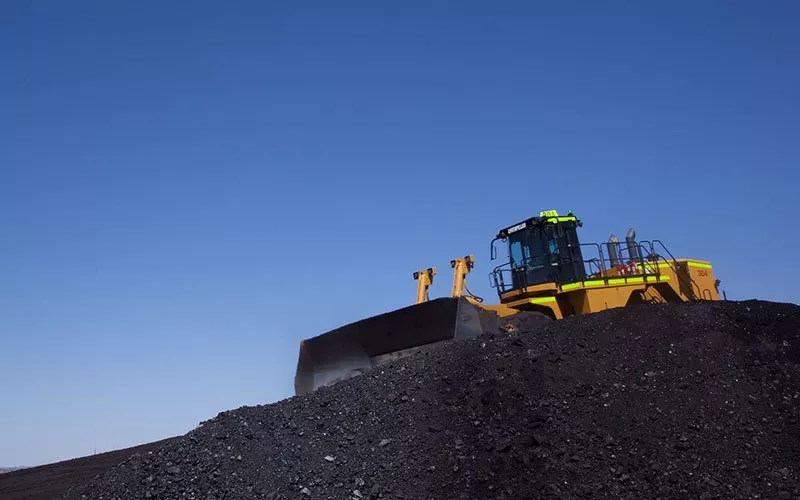
WASHINGTON – Navajo and Hopi witnesses agreed the region needs to move away from its economic dependence on coal, but specific proposals on how to get there remained elusive after a House hearing Tuesday.
The tribal representatives joined witnesses from across coal country at a House hearing on “supporting communities through the energy transition” – a transition that has been particularly hard on northeastern Arizona. The recent closure of mines there has left hundreds unemployed in an area with chronically high jobless rates.
“Our Navajo Nation government’s gross income from coal revenue severely decreased and we still have not found a way to replace the revenue in future fiscal years,” said Navajo Council Member Rickie Nez.
Nez said that while the transition away from coal has been “very painful,” tribal communities such as his are built on “a wealth of natural resources, including the critical minerals and rare earth elements necessary for achieving a renewable energy transition.” The area has the natural resources to rebound if the federal government stops throwing up hurdles to development, he said.
“We believe we have the right and responsibility to develop and manage these resources,” said Nez, who is also chairman of the council’s Resources and Development Committee. “Unfortunately, an estimated 86% of Indian lands that have this mineral wealth potential remain underdeveloped because of the federal government’s often heavy-handed regulation of Indian property.”
But other witnesses said that before moving forward, the government needs to make sure that mining companies clean up what they left behind.
“We Hopi people are very concerned that there is virtually nothing being done to repair and rehabilitate our lands that have been damaged and destroyed by over half a century of coal mining at Black Mesa,” said Ben Nuvamsa, executive director of the KIVA Institute and a former chairman of the Hopi tribe.
Nuvamsa, in joint testimony with Tó Nizhóní Ání Executive Director Nicole Horseherder, said the federal government’s focus should be on repairing the environmental damage that coal mines left behind.
“A half-century of coal mining and water withdrawals by Peabody have left considerable damage across the two mine sites that still remains unaddressed years after closure,” said Horseherder, founder of the grassroots Navajo group.