

Thursday, June 17, 2021
Wednesday, June 16, 2021
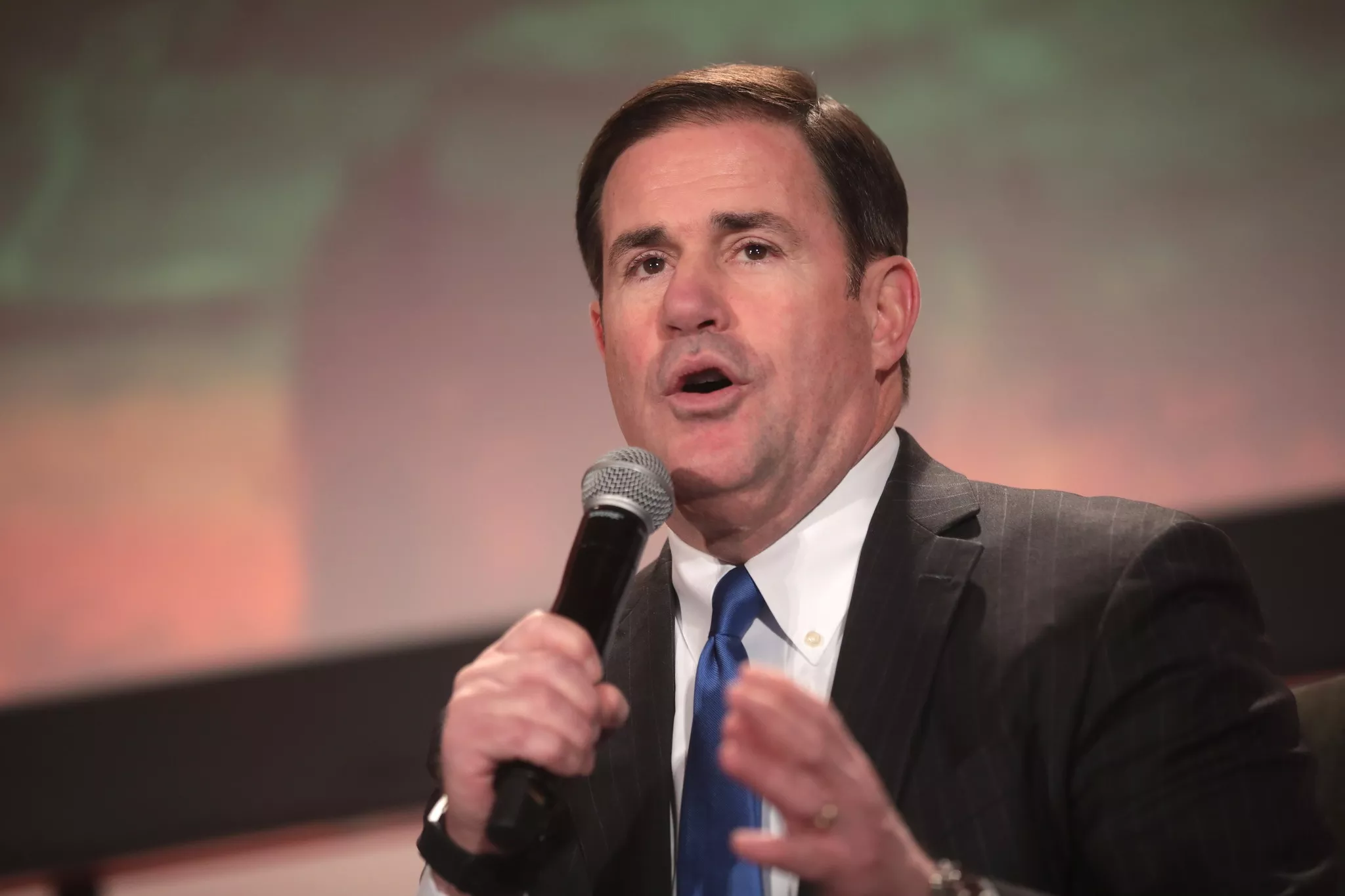
Gov. Doug Ducey issued an executive order on Tuesday preventing Arizona’s public universities and community colleges from mandating students to receive the COVID-19 vaccine or submit COVID-19 vaccination documents. In addition, higher education students cannot be mandated to be tested for the virus or wear masks in order to participate in learning.
“The vaccine works, and we encourage Arizonans to take it. But it is a choice and we need to keep it that way,” Ducey said in a news release. “Public education is a public right, and taxpayers are paying for it. We need to make our public universities available for students to return to learning. They have already missed out on too much learning.”
The executive order provides exemptions for students participating in medical or clinical training. It also does not prevent colleges from encouraging vaccinations, providing testing or having voluntary mask usage. According to the executive order, although COVID is highly contagious, it has not demonstrated transmission characteristics that would mandate vaccines in "narrow circumstances."
Arizona has administered more than 6 million vaccine doses to date, with more than 3 million Arizonans fully vaccinated.
Read the full executive order here.

PHOENIX – The New York Guardians of the XFL, a professional spring football league, began March 2020 with great optimism. The Guardians routed the Dallas Renegades 30-12 on March 7 behind their stifling second-half defense to move to 3-2 on the season. The next week would bring a showdown with the undefeated Houston Roughnecks – or so they thought.
By March 14, the season had already been canceled because of the COVID-19 pandemic.
“Our last meeting was pretty sad, hearts were pretty heavy, just because as guys who are looking for an opportunity,” said Wesley Sutton, who played safety for the Guardians. “(We had) finally found a great opportunity to showcase our talents, and more importantly just be able to play football again on a professional level.”
But the pandemic didn’t mean the end of the road for Sutton, a former standout at Chandler High School and Northern Arizona University. In the following year, he picked up work as a personal trainer, bided his time and soon found a new opportunity to the north. On March 22, 2021, he signed with the Montreal Alouettes of the Canadian Football League.
Sutton isn’t the only Arizonan to pursue professional football up north. His onetime NAU teammate Emmanuel Butler, who attended Mountain Pointe High School, is trying to make it as a wide receiver for the Hamilton Tiger-Cats. To the west, Tucson native and former University of Arizona standout Ka’Deem Carey is ensconced in the Calgary Stampeders’ backfield. In short, as remote as the CFL may seem for American football fans, it continues to provide a viable career path for many aspiring football players and coaches with Arizona ties.
Terrance Vaughn, a member of the Canadian Football Hall of Fame, played his college ball at Arizona. He joined the Calgary Stampeders in 1995 after a brief stint with the Arizona Cardinals and, over the course of a decorated 12-year career, became the first receiver to reach 1,000 catches in the CFL.
PHOENIX – Phoenix Sky Harbor International Airport is filling up with more travelers this summer, with more than 4.8 million passengers boarding flights there in the past four months alone, according to a report published on the airport’s website.
Due to the low volume of travelers at the height of the pandemic, getting through security and the preboarding process was quick and easy. But today, the process is a bit more difficult, according to Patricia Mancha, a media Transportation Security Administration spokesperson.
“During the pandemic, if anyone traveled they saw no lines. It was a quick process. That’s not the case anymore,” Mancha said.
The COVID-19 pandemic hit American travelers hard in 2020 and early 2021. In addition to lockdowns and people’s health concerns over travel, government-issued bans on travel to countries such as Iran, China, the United Kingdom, Brazil, South Africa and most recently, India.
According to Sky Harbor officials, 2020 had a total of around 21 million travelers, compared to the more than 40 million who traveled through the airport in every other year in the decade.
Tuesday, June 15, 2021

In the face of 110+ degree heat expected throughout the week, the City of Tucson has opened six air-conditioned cooling centers across town, one in each ward.
The centers will be open from noon to 6 p.m. through Friday. The City also plans to reopen them if more days reach 110 degrees. All are welcome, masks are strongly encouraged.
- Ward 1: El Rio Center, 1390 W. Speedway Blvd.
- Ward 2: Udall Sr. Center, 7200 E. Tanque Verde Road
- Ward 3: Donna Liggins, 2160 N. Sixth Ave.
- Ward 4: Clements, 8155 E. Poinciana Drive
- Ward 5: El Pueblo, Building 9, 101 W. Irvington Road
- Ward 6: Randolph Center, 200 S. Alvernon Way
Additionally, the Tucson Pima Collaboration to End Homelessness has also compiled a list of additional cooling stations and locations for water and supplies.
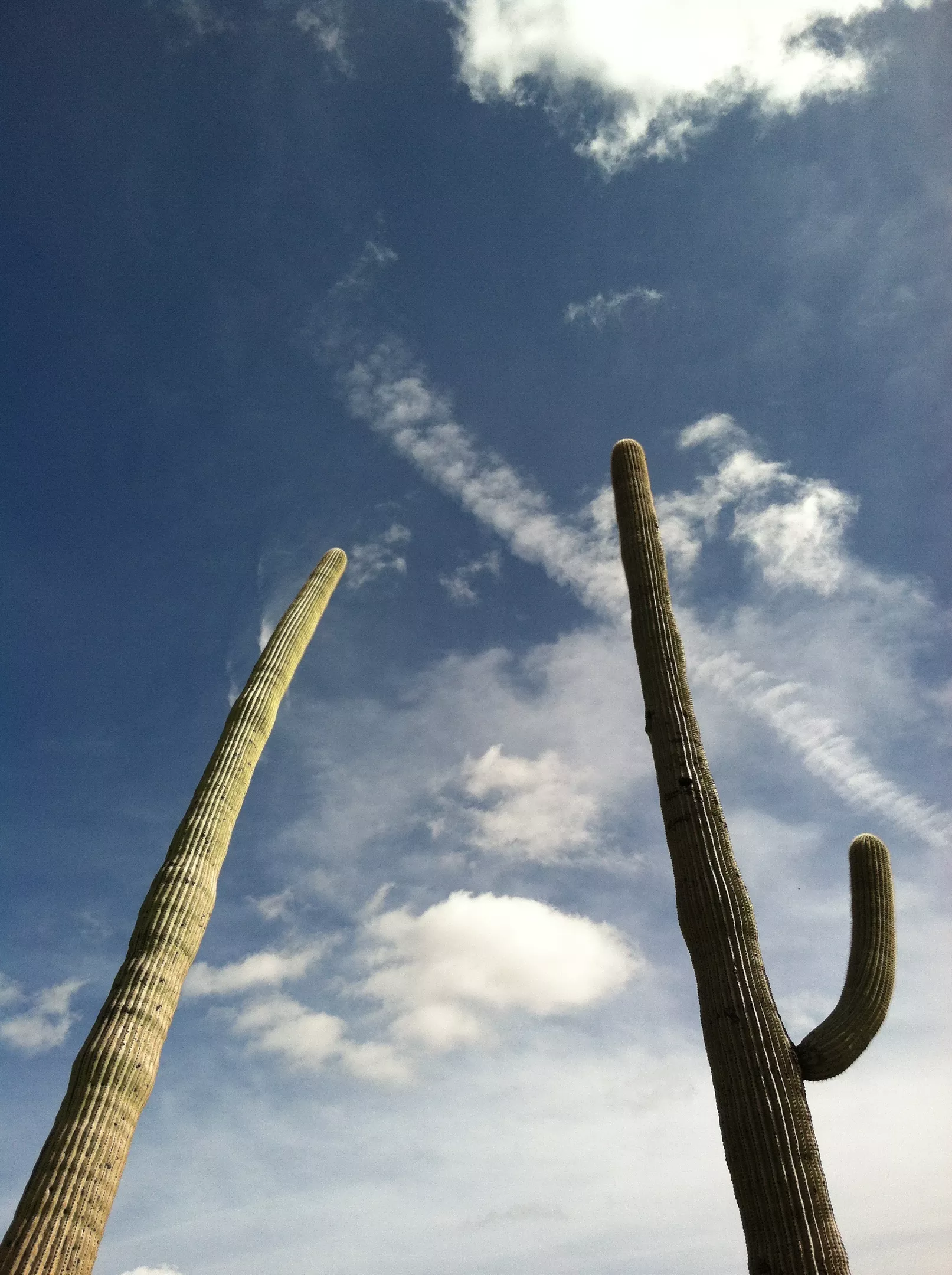
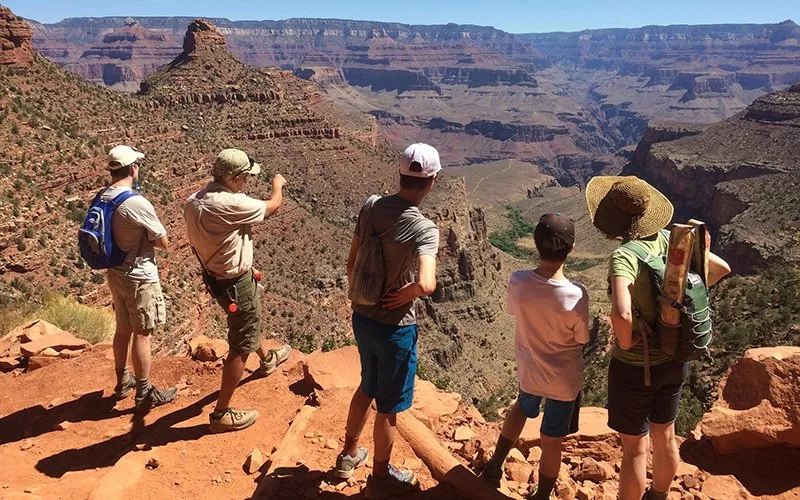
WASHINGTON – After hitting a 40-year low in the pandemic year of 2020, national park visitors – and their dollars – are steadily returning, but they are still below pre-pandemic levels, according to new National Park Service data.
Park restrictions and outright closures in response to COVID-19 led the number of park visitors to fall from 327.5 million in 2019 to 237.1 million last year. At the same time, national park visitor spending plummeted, from $21 billion to $14.5 billion.
The same was true in Arizona where visitors to national parks went from 12.5 million in 2019 to 7.7 million during the pandemic, and spending – on everything from gas to groceries, from lodging to recreational activities – decreased from $1.3 billion to $712 million.
“Calendar year 2020 was far from normal,” said Steve Sullivan, the Grand Canyon permits program manager with the Backcountry Information Center.
But Sullivan said business started picking up in April 2021, and his office has already received more than 2,000 permit applications for September and October, nearly filling campsites.
“We still have a ton of people who want to come during summer,” Sullivan said, despite Arizona’s brutal summer hiking conditions.
Other businesses around the Grand Canyon were similarly optimistic. They said interest is high and they are confident that park tourism will soon be back to the previous levels.
John Dillon, executive director of the Grand Canyon River Outfitters Association, said his 16 member companies saw revenues fall by $22 million when the park was closed in the first half of 2020. But he said those same businesses have been operating at full capacity since last June when COVID-19 restrictions eased.


