

Wednesday, April 28, 2021
Tuesday, April 27, 2021

After more than a year of outdoor and online events, the Loft Cinema is planning to reopen for indoor screenings beginning Friday, May 7. To begin, screenings will only take place in their main auditorium, and will include staggered seating and mandatory masks for customers and staff (when not eating or drinking).
The Loft is reopening with the "Street Gang: How We Got to Sesame Street," the new documentary about the groundbreaking children's series. The rest of The Loft Cinema’s reopening programming schedule will be announced soon.
"It’s been difficult and draining to have been closed for almost 14 months," said Peggy Johnson, executive director of The Loft Cinema. “We can’t wait to welcome our audiences back to watch films indoors at The Loft."
In addition to indoor screenings, The Loft is continuing their online screenings and outdoor "open-air" cinema for the time being. For show times, visit loftcinema.org.
The Arizona Department of Health Services yesterday recommended resuming the use of the Johnson & Johnson vaccine after the CDC and FDA safety review Sunday.
On Friday, the Advisory Committee on Immunization Practices voted to recommend the J&J vaccine, but members wanted clear messaging about the possible risks for women younger than 50 years old.
On April 13, the CDC and FDA recommended pausing the vaccine after six reported cases of a rare adverse event among women developed blood clotting with low blood platelets after receiving J&J. The CDC determined the event is rare, occurring at a rate of 7 per 1 million vaccinated women between the age of 18 to 49.
“After recommending a pause out of an abundance of caution, we join our federal partners in encouraging everyone to get vaccinated against COVID-19 with the vaccine available to you,” ADHS Director Dr. Cara Christ said. “Arizonans can be confident that all COVID-19 vaccines approved for emergency use, including the Johnson & Johnson vaccine, have undergone a thorough review for safety and efficacy. The federal review will continue on all of the vaccines as more people are vaccinated.”
Arizona has allocated 226,300 vaccine doses of J&J and administered approximately 122,000. Local health departments paused the use of the J&J vaccine, which was being used in hard-to-reach communities. Pima County had allocated the use of J&J for their mobile clinics, targeting minority and vulnerable communities.
The Pima County Health Department will resume the use of J&J along with “any approved vaccine at our disposal,” said Health Department spokesman Aaron Pacheco.
The county will continue to offer the vaccine at mobile sites, but as supply increases would also offer it at larger locations that have requested it, including TMC One, “so it is no longer being specifically targeted for only mobile events or hard to reach populations,” Pacheco said.
As health departments grapple with the vaccine hesitancy, especially after the pause of the Johnson & Johnson vaccine, Pacheco said the county looks to address “the risk vs. benefit reality of the vaccine.”
“Every medical treatment or procedure has a measurement of risk. In this case, that risk is incredibly low, while the benefit and efficacy of the vaccine is incredibly high. It is also important to share that the system in place to identify and respond to potential risks is strong. That is why this issue was identified so quickly,” Pacheco said.
The county is sharing the FDA Fact Sheet, with updated information addressing the concerns that led to the pause. The county has about 12,600 J&J vaccine doses as of Monday.
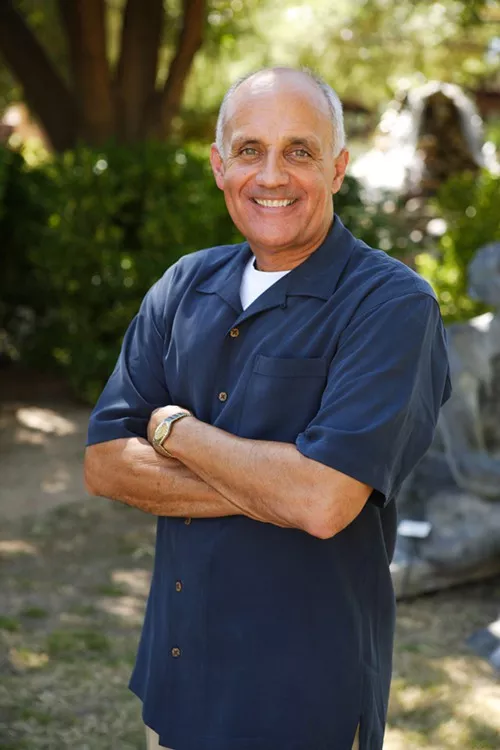
Dr. Richard Carmona, the former U.S. surgeon general and UA Task Force director, said it remains unclear whether the blood clotting is directly related to the vaccine “but the benefit of this vaccine is enough that we all agreed that it should go back to market.”
“We need to get this vaccine back out there because it is a very effective vaccine,” said Carmona.
However, vaccine demand has stalled nationwide and in the state with tens of thousands of appointments available at state vaccination sites last week.
“As a number of daily vaccinations at large PODs, like the one at the university, decline and as the PODs are being decommissioned, outreach to rural and other underserved communities is going to become even more important,” said UA President Robert C. Robbins.
He points to the work of the Mobile Health Program at the university, which has dispensed more than 10,000 doses of vaccine across the state. Robbins announced the university is working with the Santa Cruz County Health Department and the Mexican Consulate of Nogales to host a clinic on April 28 that will vaccinate about 150 truck drivers who transport produce and other goods in Arizona and across the nation.
COVID numbers continue on plateau
Dr. Joe Gerald, an epidemiologist and professor who has been following the spread of the coronavirus for more than a year, said the state had seen slight increases in the number of positive COVID tests over the last four week, reversing a steady decline since January.
In the week ending April 18, 5,014 people tested positive for COVID, a 6% increase from the previous week.
“Arizona cases remain ‘stuck’ at just about the threshold differentiating substantial and moderate risk owing to more transmissible variants and normalization of business and social activities,” Gerard wrote in a weekend report that noted that new cases are being diagnosed at a rate of 70 per 100,000 residents. During the week ending March 23, the rate had dropped to 53 cases per 100,000 residents, with the rate slowly but surely increasing since then.
Dr. Richard Carmona, the former surgeon general, told reporters yesterday that vaccinations not only protect those who have been vaccinated, but the shot also slows transmission in the community, which is especially important because of developing variants.
“Not only to protect yourself, but to protect the nation and the world, get a vaccine because if we can prevent that virus from getting into another body where it might make a mutation—that becomes consequential, then we have problems. So get your vaccines as quickly as possible,” said Carmona.
Preliminary results from the University of Arizona student survey show that almost half of the students who responded have been vaccinated.
The survey sent out on April 15 asked students about their vaccine participation and barriers they may face in getting vaccinated. As of Monday, more than 5,000 students have responded to the survey, with about half saying they received the first dose, said Vice President of Communications Holly Jensen. Students still have time to submit responses to the survey.
“There is clearly going to be a subset, just like there is in society at large for medical reasons, valid medical reasons, aren't going to take the vaccine, and for a variety of other reasons, but we think that number is going to be quite low compared to the general population,” said Robbins.
Vaccine efforts continue
As the county continues its mobile vaccination effort to deliver shots to those vulnerable or minority communities, Pima County Medical Director Francisco Garcia said the county is planning efforts to address vaccine hesitancy.
“We cannot underestimate the impact that the J&J and the federal action to take J&J temporarily off the table has had on vaccine demand,” said Garcia. “Remember that J&J was actually, probably, the most commonly requested, that was actually kind of the only brand that was being requested when we were doing our vaccination PODs.”
With both Pfizer and Moderna, Garcia said the challenge was making sure people got the second dose and committing the mobile clinic to return to the same location. He said the strategy continues to evolve, but they are making sure that when people vaccinated at a mobile site, “they understand that they need a second shot, and that they understand where to go for that second shot, because in some cases we will not be able to be back in exactly that same neighborhood exactly four weeks down the road in order to vaccinate.”
The county has not administered Pfizer at a mobile clinic because it requires ultra cold chain handling and it comes in multi-use vials with several doses. Garcia said Pfizer would pose the issue of “vaccine wastage.”
“You can imagine that as demand slackens, what happens when you've popped open a vial of Pfizer with 14 doses, but you only have 10 people?” asked Garcia. “We are still feeling that need to be as careful with that resource, but by the same token, not missing the opportunity to pivot. If somebody shows up not missing that opportunity to vaccinate that individual.”
“We know that a lot of people are not actually truly resistant, but are just hesitant. They're waiting to see how the dust settles,” said Garcia. “We're hoping to make vaccine opportunities so ubiquitous throughout our community, whether it's on Fourth Avenue, whether it's in some of these parts, whether it's at a fixed site. We're trying to make it so damn ubiquitous, that essentially you fall into a vaccination needle without much effort. If we can decrease those barriers for those folks for whom these are obstacles. I believe that we will continue to make progress.”
Vaccine walk-ins welcome; appointments available
You no longer need an appointment to get a shot at the UA vaccination point of distribution. The POD will now accept anyone over the age of 16 who comes in for a shot.
The pod, which offers both a drive-thru clinic on the UA Mall and a sit-down clinic in the Ina E. Gittings Building (1737 E. University Blvd.), is open from 10 a.m. to 10 p.m. daily.
If you’d rather schedule an appointment, the state is expected to open new first-dose appointments daily at podvaccine.azdhs.gov. Call 602-542-1000 or 844-542-8201 for help in English or Spanish.
Because of rising temperatures, the drive-thru clinic will close on May 3.
If you need help, call the COVID Ambassador Team hotline at 520-848-4045 between 7 a.m. and 7 p.m. daily or email [email protected].
Meanwhile, Pima County officials are shifting to indoor vaccination sites to avoid making staff and volunteers endure long days in triple-degree temperatures.
Tucson Medical Center has shut down its drive-thru vaccination clinics and transferred its operations to the Udall Center, 7200 E. Tanque Verde Road. The site is open 8 a.m. to 5 p.m. Monday, Thursday and Friday and 8 a.m. to 7 p.m. Tuesday and Wednesday. Register at https://vaccine.tmcaz.com/MyChart/OpenScheduling.
Pima County has opened a new indoor vaccine site at the Kino Event Center, where the county had earlier been doing COVID testing. That site is open 9 a.m. to 7 p.m., Monday through Saturday. Register at azdhs.gov.
The county has also opened an indoor vaccination POD at El Pueblo Center, 101 W. Irvington Road, which is open Monday, Wednesday and Friday from 9:30 a.m. to 1:30 p.m. No appointment is necessary.
The drive-through POD at Banner-South Kino Stadium, 2500 E. Ajo Way, is now offering appointments between 7:30 a.m. and 12:30 p.m. and will close permanently on May 14.
As of Tuesday, April 27, 393,443 people in Pima County had received at least one shot of the virus, accounting for 37.7% of the population. A total of 304,038 people were fully vaccinated.
For more information or additional mobile clinics, visit pima.gov/covid19vaccineregistration or call 520-222-0119.
Many local pharmacies are now receiving vaccine doses. To find one near you, visit the ADHS website.
Get tested: Pima County has free COVID testing
Pima County is continuing to offer a number of testing centers and pop-up testing sites around town, including the northside Ellie Towne Flowing Wells Community Center, 1660 W. Ruthrauff Road. Schedule an appointment at pima.gov/covid19testing.
The University of Arizona’s antibody testing can determine if you have had COVID and now have antibodies. To sign up for testing, visit https://covid19antibodytesting.arizona.edu/home.
Today’s numbers
With 682 new cases reported today, the total number of Arizona’s confirmed novel coronavirus cases rose past 860,000 as of Tuesday, April 27, according to the Arizona Department of Health Services.
Pima County, which reported 64 new cases today, has seen 114,956 of the state’s 860,169 confirmed cases.
With 8 new deaths reported this morning, a total of 17,276 Arizonans have died after contracting COVID-19, including 2,391 deaths in Pima County, according to the April 27 report.
A total of 615 coronavirus patients were in the hospital as of April 26. That’s roughly 12% of the number hospitalized at the peak of the winter surge, which reached 5,082 on Jan. 12. The summer peak was 3,517, which was set on July 13, 2020. The subsequent lowest number of hospitalized COVID patients was 468, set on Sept. 27, 2020.
A total of 900 people visited emergency rooms with COVID-like symptoms on April 25. That number represents 38% of the record high of 2,341 set on Tuesday, Dec. 29, 2020. That number had peaked during the summer wave at 2,008 on July 7, 2020; it hit a subsequent low of 653 on Sept. 28, 2020.
A total of 185 COVID-19 patients were in intensive care unit beds on April 25d, which roughly 15% of the record 1,183 ICU patients set on Jan. 11. The summer’s record number of patients in ICU beds was 970, set on July 13, 2020. The subsequent low was 114 on Sept. 22, 2020.
—with additional reporting from Austin Counts, Christina Duran, Jeff Gardner and Mike Truelsen
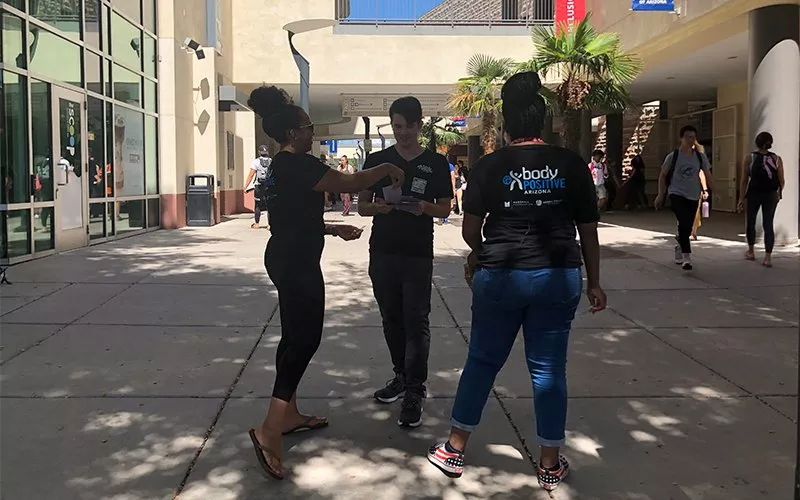
PHOENIX – Beyond the physical toll of COVID-19, many are facing pandemic-related mental health challenges, including the way they view themselves and their bodies.
Stress, anxiety, depression and decreased human interaction all play a role in the development of negative body image, said Amy Lerner Wasserbauer, a clinical psychologist and counselor at Arizona State University.
“COVID has brought a lot of powerlessness and grief to people,” she said, “so stress, anxiety – all of these are emotional issues around COVID and we tend to focus on external ways of coping when we are under emotional distress.”
A recent study in the United Kingdom found that fears around COVID-19, as well as the consequences of restrictions mandated to curb the spread of the coronavirus that causes the disease, could be contributing to a number of serious mental health issues – including eating disorders.
The research, published in the journal Personality and Individual Differences, surveyed 506 adults in the U.K., with an average age of 34.
The study found that for women, feelings of anxiety and stress caused by COVID-19 were associated with a greater desire for thinness. Among men, the study found that COVID-19-related anxiety and stress was associated with a greater desire for muscularity, with anxiety also associated with body fat dissatisfaction.
Wasserbauer said one coping mechanism many people resort to is food for comfort, shutting down and not exercising. The other, she said, is overexercising, starving oneself and anorexia.
Monday, April 26, 2021
The Arizona Department of Health Services recommends resuming the use of the Johnson & Johnson vaccine after the CDC and FDA safety review Sunday.
On Friday, the Advisory Committee on Immunization Practices voted to recommend the J&J vaccine, but members wanted clear messaging about the possible risks for women younger than 50 years old.
On April 13, the CDC and FDA recommended pausing the vaccine after six reported cases of a rare adverse event among women developed blood clotting with low blood platelets after receiving J&J. The CDC determined the event is rare, occurring at a rate of 7 per 1 million vaccinated women between the age of 18 to 49.
“After recommending a pause out of an abundance of caution, we join our federal partners in encouraging everyone to get vaccinated against COVID-19 with the vaccine available to you,” ADHS Director Dr. Cara Christ said. “Arizonans can be confident that all COVID-19 vaccines approved for emergency use, including the Johnson & Johnson vaccine, have undergone a thorough review for safety and efficacy. The federal review will continue on all of the vaccines as more people are vaccinated.”
Arizona has allocated 226,300 vaccine doses of J&J and administered approximately 122,000. Local health departments paused the use of the J&J vaccine, which was being used in hard-to-reach communities. Pima County had allocated the use of J&J for their mobile clinics, targeting minority and vulnerable communities.
The Pima County Health Department will resume the use of J&J along with “any approved vaccine at our disposal,” said Health Department spokesman Aaron Pacheco.
The county will continue to offer the vaccine at mobile sites, but as supply increases would also offer it at larger locations that have requested it, including TMC One, “so it is no longer being specifically targeted for only mobile events or hard to reach populations,” Pacheco said.
As health departments grapple with the vaccine hesitancy, especially after the pause of the Johnson & Johnson vaccine, Pacheco said the county looks to address “the risk vs. benefit reality of the vaccine.”
“Every medical treatment or procedure has a measurement of risk. In this case, that risk is incredibly low, while the benefit and efficacy of the vaccine is incredibly high. It is also important to share that the system in place to identify and respond to potential risks is strong. That is why this issue was identified so quickly,” Pacheco said.
The county is sharing the FDA Fact Sheet, with updated information addressing the concerns that led to the pause. The county has about 12,600 J&J vaccine doses as of Monday.
Dr. Richard Carmona, the former U.S. surgeon general and UA Task Force director, said it remains unclear whether the blood clotting is directly related to the vaccine “but the benefit of this vaccine is enough that we all agreed that it should go back to market.”
“We need to get this vaccine back out there because it is a very effective vaccine,” said Carmona.
However, vaccine demand has stalled nationwide and in the state with tens of thousands of appointments available at state vaccination sites last week.
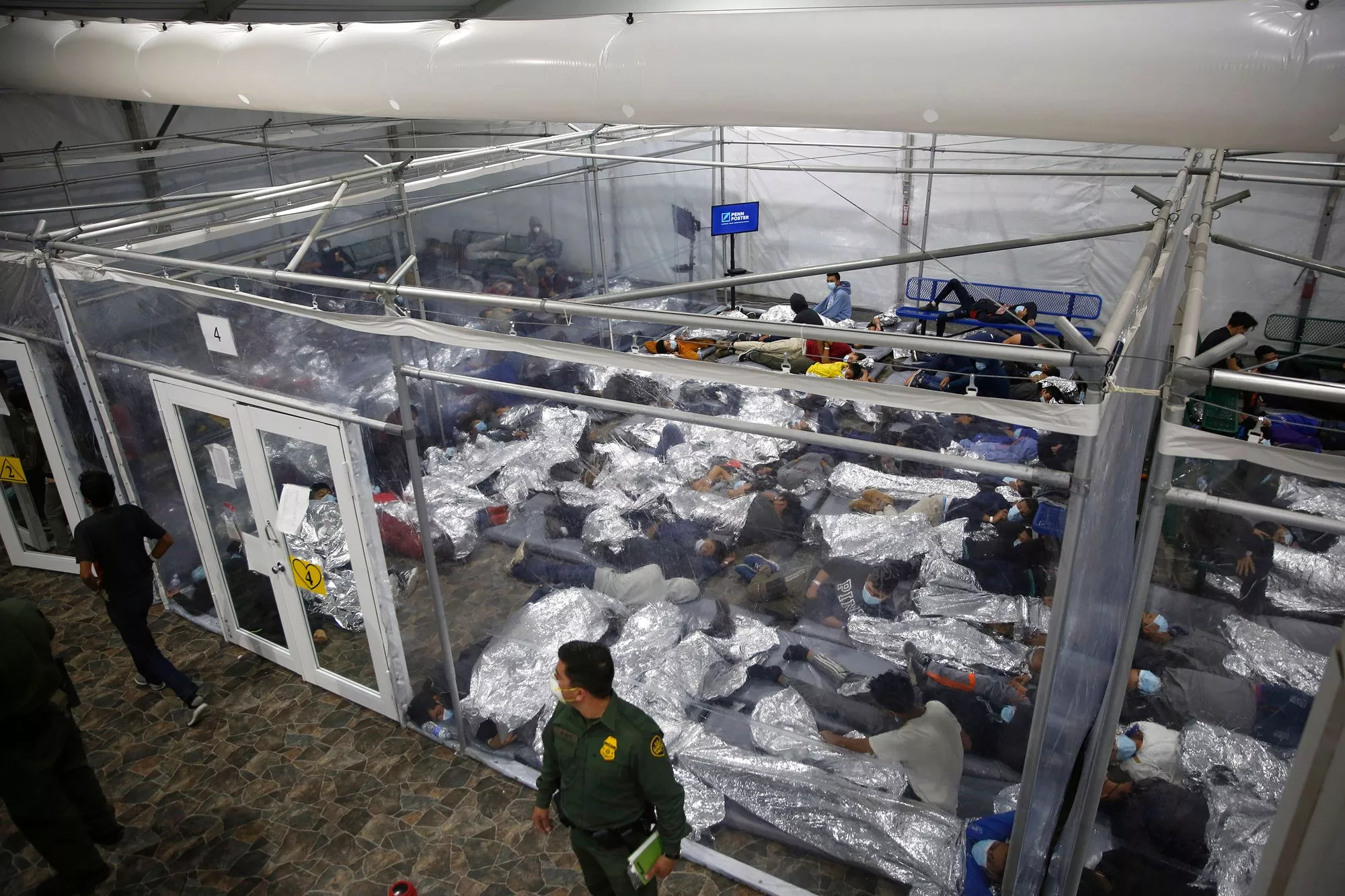
After ignoring signs that shelters were filling quickly, agencies are scrambling to get thousands of kids out of Border Patrol jails. But new “emergency” facilities skirt safety standards, while facilities accused of abuse are still getting grants.
The startling images have appeared in one news report after another: children packed into overcrowded, unsafe Border Patrol facilities because there was nowhere else to put them. As of March 30, over 5,000 children were being held in Border Patrol custody, including more than 600 in each of two units in Donna, Texas, that were supposed to hold no more than 32 apiece under COVID-19 protocols.
But as the Biden administration’s Department of Health and Human Services scrambles to open “emergency” temporary facilities at military bases, work camps and convention centers to house up to 15,000 additional children, it’s cutting corners on health and safety standards, which raises new concerns about its ability to protect children, according to congressional sources and legal observers. And even its permanent shelter network includes some facilities whose grants were renewed this year despite a record of complaints about the physical or sexual abuse of children.
“There may be no good choices,” Mark Greenberg, a former head of the Administration for Children and Families (which oversees the unaccompanied-children program) at the HHS, told ProPublica. “Everything has to be weighed against the alternative. And the alternative is the backups at Customs and Border Protection. And recognizing how bad that is, it means that people have to make unpalatable decisions.”
According to internal government statistics and interviews with former officials, legal observers, advocates and congressional staff, those decisions came weeks or months after the first warning signs late last year that the number of unaccompanied minors crossing the southern U.S. border was rapidly increasing, forcing a scramble to set up facilities in a matter of days. No safety standards are in place at the new facilities — unlike controversial “influx” facilities used in the past.
One new site in Midland, Texas, was briefly closed to new arrivals after the state warned that its water wasn’t drinkable. That site and others have been staffed with volunteers who may not have passed background checks and speak no Spanish. One potential site — a NASA research center in Moffett, California — was scuttled after local protesters pointed out it was near a known Superfund site with high levels of toxic chemicals.
The Pima County Health Department is working to launch six mobile vaccination sites with FEMA funding.
Pima County Medical Director Dr. Francisco Garcia discussed the move on Friday, saying that the county hoped FEMA would help cover some of the costs of setting up the clinics as county officials work to vaccinate more residents.
Garcia said the county had given up on obtaining permission from the state to bring more vaccine doses to Pima County, but the county has plenty of vaccine now. The challenge is persuading those who are vaccine-hesitant to get their first shot and convincing those who had their first shot to get their second.
"Fortunately, today we have the vaccine in our hands,” Garcia said.
The “Plan B” asks for six mobile sites with funding from FEMA, according to Huckelberry’s April 20 memo. The sites will not need the permission of Gov. Doug Ducey and Arizona Health Director Cara Christ, who had put multiple roadblocks in the path of a Pima-FEMA partnership that would have delivered enough doses to vaccinate more than 200,000 residents.
County doubles down on vaccination effort
As the county continues its mobile vaccination effort to deliver shots to those vulnerable or minority communities, Garcia said the county is planning efforts to address vaccine hesitancy, especially after the pause of Johnson & Johnson.
“We cannot underestimate the impact that the J&J and the federal action to take J&J temporarily off the table has had on vaccine demand,” said Garcia. “Remember that J&J was actually, probably, the most commonly requested, that was actually kind of the only brand that was being requested when we were doing our vaccination PODs.”
With the pause, the mobile site began offering Moderna, as the Pfizer vaccine continues to face issues in mobile site implementation.
With both Pfizer and Moderna, Garcia said the challenge was the second dose, and committing the mobile clinic to return to the same location. He said the strategy continues to evolve, but they are making sure that when people vaccinated at a mobile site, “they understand that they need a second shot, and that they understand where to go for that second shot, because in some cases we will not be able to be back in exactly that same neighborhood exactly four weeks down the road in order to vaccinate.”
The county has not administered Pfizer at a mobile clinic because it requires ultra cold chain handling and it comes in multi-use vials with several doses. Garcia said Pfizer would pose the issue of “vaccine wastage.”
“You can imagine that as demand slackens, what happens when you've popped open a vial of Pfizer with 14 doses, but you only have 10 people?” asked Garcia. “We are still feeling that need to be as careful with that resource, but by the same token, not missing the opportunity to pivot. If somebody shows up not missing that opportunity to vaccinate that individual.”
He notes that not only was the Johnson & Johnson vaccine on pause last week, but other people getting vaccinated with Pfizer or Moderna were questioning the safety of the vaccines. He said they are working four times as hard for every vaccine delivered.
“We know that a lot of people are not actually truly resistant, but are just hesitant. They're waiting to see how the dust settles,” said Garcia. “We're hoping to make vaccine opportunities so ubiquitous throughout our community, whether it's on Fourth Avenue, whether it's in some of these parts, whether it's at a fixed site. We're trying to make it so damn ubiquitous, that essentially you fall into a vaccination needle without much effort. If we can decrease those barriers for those folks for whom these are obstacles. I believe that we will continue to make progress.”
County continues to require masks
Following Gov. Doug Ducey’s executive order rescinding mask mandates for K-12 schools and signing a bill that allows businesses to ignore local jurisdiction mask mandates, the health department updated its Public Health Advisory on Friday, April 23.
It made clear for schools that the Board of Supervisors Resolution 2020-96 is still in effect, which requires people over the age of 5 to wear masks. It also states that businesses should follow “state, county, and industry-specific guidance related to COVID-19 mitigation.”
“We believe that our mask mandate is legal and valid until 90 days after this legislature adjourns and because we have this short window of time to get people vaccinated, we're going to double down and do everything that we can in order to encourage people, cajole, incentivize people to be observant of that mask mandate,” said Garcia. “It really has an impact on the infection in this community.”
The health department surpassed its goal of 300,000 vaccines administered by March 31, with 621,000 vaccines administered as of April 21.
“We’re not done yet folks,” said Garcia, pointing out the plateau of COVID-19 cases daily since March 14, where the state has seen around 600 cases of COVID-19 daily.
ACIP recommends J&J in the U.S.
The CDC Advisory Committee on Immunization Practices (ACIP) voted 10-4, with one member abstaining, to recommend the use of the Johnson & Johnson vaccine in the U.S. last week.
Members moved to vote on two different interim recommendations. The first only stated the recommendation of the J&J vaccine for persons 18 and older in the U.S. under FDA’s Emergency Use Authorization, while the second added a note that women under the age of 50 should be aware of the “increased risk of Thrombosis with Thrombocytopenia Syndrome (TTS) and may choose another COVID-19 vaccine authorized for use in the U.S.”
The administration paused the vaccine last week after reports of six women developing a rare blood clot disorder after receiving the J&J vaccine.
The disorder combines blood clotting (Thrombosis), often in the brain with a low level of platelets, the blood cells that promote clotting, which is called (Thrombocytopenia Syndrome).
At the meeting, a CDC scientist confirmed nine new confirmed cases of the rare disorder, all women, bringing the total to 15, with 13 cases in women between 18 and 49 years old.
If the use of the Janssen vaccine resumed for those 18 and older, 26 to 45 cases of blood clotting disorder could be expected over the next six months, according to a model presented by CDC Scientist Dr. Sara Oliver. However, we could also expect about 800 to 3,500 fewer ICU admissions and 600 to 1,400 fewer deaths.
The majority voted for the first recommendation, but those in favor agreed with the four that voted no.
“I voted yes. I can live with this recommendation, but I think that under an emergency use authorization, where there is no inside informed consent, that it could be that ACIP recommendations might need to reflect some more nuanced concerns than under the usual procedure,” said Dr. Beth Bell, ACIP voting member and COVID-19 workgroup chair. “I am concerned that the consumers and women in this age group in particular, will not be adequately informed just by the FDA EUA vaccines and so we really are depending on the public health agencies and the partner organizations to make sure that people actually are informed and are empowered, and that they actually get a balanced perspective.”
Southern AZ COVID-19 AM Roundup for Monday, April 26: County working with FEMA on new vax sites; Walk-ins welcome at UA vax POD, other locations; Mask ordinance remains in place in Pima County; Here’s how to set up vaccine appointmentsVaccine walk-ins welcome; appointments available
You no longer need an appointment to get a shot at the UA vaccination point of distribution. The POD will now accept anyone over the age of 16 who comes in for a shot.
The pod, which offers both a drive-thru clinic on the UA Mall and a sit-down clinic in the Ina E. Gittings Building (1737 E. University Blvd.), is open from 10 a.m. to 10 p.m. daily.
If you’d rather schedule an appointment, the state is expected to open new first-dose appointments daily at podvaccine.azdhs.gov. Call 602-542-1000 or 844-542-8201 for help in English or Spanish.
Because of rising temperatures, the drive-thru clinic will close on May 3.
If you need help, call the COVID Ambassador Team hotline at 520-848-4045 between 7 a.m. and 7 p.m. daily or email [email protected].
Meanwhile, Pima County officials are shifting to indoor vaccination sites to avoid making staff and volunteers endure long days in triple-degree temperatures.
Pima County has opened a new indoor vaccine site at the Kino Event Center, where the county had earlier been doing COVID testing. That site is open 9 a.m. to 7 p.m., Monday through Saturday. Register at azdhs.gov.
The county has also opened an indoor vaccination POD at El Pueblo Center, 101 W. Irvington Road, which is open Monday, Wednesday and Friday from 9:30 a.m. to 1:30 p.m. No appointment is necessary.
The drive-through POD at Banner-South Kino Stadium, 2500 E. Ajo Way, is now offering appointments between 7:30 a.m. and 12:30 p.m. and will close permanently on May 14.
As of Sunday, April 25, 391,523 people in Pima County had received at least one shot of the virus, accounting for 37.5% of the population. A total of 299,659 people were fully vaccinated.
Register for an appointment at a Pima County POD at pima.gov/covid19vaccineregistration or by calling 520-222-0119.
Many local pharmacies are now receiving vaccine doses. To find one near you, visit the ADHS website.
Get tested: Pima County has free COVID testing
Pima County is continuing to offer a number of testing centers and pop-up testing sites around town, including the northside Ellie Towne Flowing Wells Community Center, 1660 W. Ruthrauff Road. Schedule an appointment at pima.gov/covid19testing.
The University of Arizona’s antibody testing can determine if you have had COVID and now have antibodies. To sign up for testing, visit https://covid19antibodytesting.arizona.edu/home.
Today’s numbers
With 750 new cases reported today, the total number of Arizona’s confirmed novel coronavirus cases rose past 859,000 as of Monday, April 26, according to the Arizona Department of Health Services.
Pima County, which reported 62 new cases today, has seen 114,892 of the state’s 859,487 confirmed cases.
With no new deaths reported this morning, a total of 17,268 Arizonans have died after contracting COVID-19, including 2,391 deaths in Pima County, according to the April 21 report.
A total of 611 coronavirus patients were in the hospital as of April 25. That’s roughly 12% of the number hospitalized at the peak of the winter surge, which reached 5,082 on Jan. 12. The summer peak was 3,517, which was set on July 13, 2020. The subsequent lowest number of hospitalized COVID patients was 468, set on Sept. 27, 2020.
A total of 946 people visited emergency rooms with COVID-like symptoms on April 25. That number represents 40% of the record high of 2,341 set on Tuesday, Dec. 29, 2020. That number had peaked during the summer wave at 2,008 on July 7, 2020; it hit a subsequent low of 653 on Sept. 28, 2020.
A total of 184 COVID-19 patients were in intensive care unit beds on April 25d, which roughly 15.5% of the record 1,183 ICU patients set on Jan. 11. The summer’s record number of patients in ICU beds was 970, set on July 13, 2020. The subsequent low was 114 on Sept. 22, 2020.
—with additional reporting from Austin Counts, Christina Duran, Jeff Gardner and Mike Truelsen

