Friday, April 2, 2021

Thursday, April 1, 2021

Tucson Unified School District announced Wednesday they have authorized senior prom and graduation ceremonies for the Class of 2021.
Graduation ceremonies will be held outside each high school stadium and will follow safety protocols, including masks and physical distancing of 3 to 6 feet apart per CDC guidelines, Each graduate has a limit of four guests, each guest must have a physical ticket.
The graduation will also be on Livestream or Facebook Live, shared by each school.
TUSD Superintendent Dr. Gabriel Trujillo said it's not mandatory, but officials are “strongly encouraging” all seniors to be fully vaccinated, or at least receive the first dose, if applicable, at least two weeks before the event.
Prom will be held outside at each high school with options of hosting prom in a large courtyard, stadium, or soccer field. Tickets will be sold on a pre-sale basis to ensure capacity limits.
Each school will determine whether to offer food, which would be prepackaged or provided by food trucks in a designated area with sanitized tables and handwashing stations located away from the main dance floor.
Trujillo said the activities can safely resume because of the increase in vaccine availability.
When TUSD staff was surveyed three weeks ago, more than half had been vaccinated, Trujillo said, with 4,600 out of 7,800 employees fully vaccinated or at least received their first dose. He estimates this number has probably increased since then.

With 381 new cases reported today, the total number of Arizona’s confirmed novel coronavirus cases topped 842,000 as of Thursday, April 1, according to the Arizona Department of Health Services.

Pima County, which reported 30 new cases today, has seen 112,707 of the state’s 842,192 confirmed cases.
With 10 new deaths reported this morning, a total of 16,997 Arizonans have died after contracting COVID-19, including 2,350 deaths in Pima County, according to the April 1 report.
A total of 604 coronavirus patients were in the hospital as of March 31. That’s roughly 12% of the number hospitalized at the peak of the winter surge, which reached 5,082 on Jan. 11. The summer peak was 3,517, which was set on July 13, 2020. The subsequent lowest number of hospitalized COVID patients was 468, set on Sept. 27, 2020.
A total of 1,016 people visited emergency rooms with COVID-like symptoms on March 31. That number represents 43% of the record high of 2,341 set on Tuesday, Dec. 29, 2020. That number had peaked during the summer wave at 2,008 on July 7, 2020; it hit a subsequent low of 653 on Sept. 28, 2020.
A total of 168 COVID-19 patients were in intensive care unit beds on March 31, which roughly 14% of the record 1,183 ICU patients set on Jan. 11. The summer’s record number of patients in ICU beds was 970, set on July 13, 2020. The subsequent low was 114 on Sept. 22, 2020.
Adults older than 16 now eligible for appointments at state vaccine centers; Pima County expands eligibility to anyone with chronic medical condition
All adults older than 16 are now eligible for appointments at state vaccination PODs.
Previously, vaccines were limited to people 55 and older as well as frontline workers, educators, first responders and healthcare workers.
New appointments for the UA POD will open up at 11 a.m. on Fridays, with the Arizona Department of Health Services announcing the number of appointments opening up on Fridays via a Wednesday Twitter post.
As of last week, Pima County expanded COVID-19 vaccine eligibility to anyone 55 and older and anyone older than 16 with at-risk circumstances.
Anyone living with a high-risk medical condition or disability, experiencing homelessness or living in a group setting, or receiving in-home or long-term care can get the vaccine. Some of the high-risk medical conditions include cancer, chronic kidney disease, heart conditions or compromised immunity.
Those in high-risk jobs will also be eligible.
Although the state has expanded eligibility to anyone over 16, Pima County's guidelines had to be limited, said Dr. Theresa Cullen, Health Department director.
“Our decisions are based on the current vaccination rates for 55 and up (which is at 42%), as well as our commitment to ensure ongoing access to vulnerable populations,” Cullen said last week. “We anticipate appointments will be filled quickly and as we move these groups, we look forward to being able to align with the state's recommendations within the next six weeks.”
You can register for your vaccine appointments at a state POD by visiting pod vaccine.azdhs.gov, and those who need assistance can call 1-844-542-8201.
Those who qualify in Pima County’s priority group of eligible vaccine recipients can register for a vaccine at www.pima.gov/covid19vaccineregistration or by calling 520-222-0119.
Many local pharmacies are now receiving vaccine doses. To find one near you, visit the ADHS website.
ADHS will now announce on Wednesdays via Twitter, @AZDHS, and Facebook the approximate number of first-dose appointments available. The Arizona Department of Health Services (ADHS) will release those new COVID-19 vaccination appointments every Friday.
Get tested: Pima County has free COVID testing
Pima County is continuing to offer a number of testing centers around town.
You’ll have a nasal swab test at the Kino Event Center (2805 E. Ajo Way) and the Udall Center (7200 E. Tanque Verde Road).
The center at the northside Ellie Towne Flowing Wells Community Center, 1660 W. Ruthrauff Road, involves a saliva test designed by ASU.
Schedule an appointment at these or other drive-thru or pop-up sites at pima.gov/covid19testing.
The University of Arizona’s antibody testing can determine if you have had COVID and now have antibodies. To sign up for testing, visit https://covid19antibodytesting.arizona.edu/home.
—with additional reporting from Austin Counts, Christina Duran, Jeff Gardner and Mike Truelsen
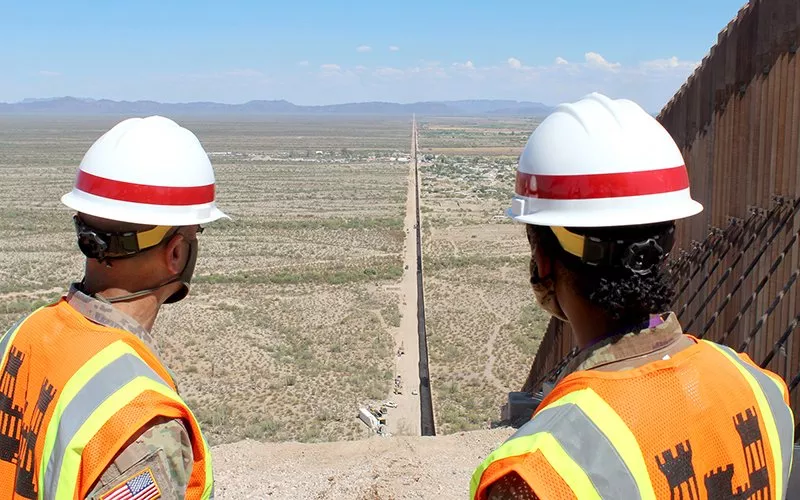
WASHINGTON – Advocates called on President Joe Biden to “tear down this wall” Tuesday and fulfill his campaign promise of stopping the border wall construction that he put on hold in January.
The meeting of border-state lawmakers, advocates and tribal members came 70 days after Biden, in one of his first acts as president, halted construction and gave the secretaries of Defense, Treasury and Homeland Security 60 days to study next steps on the wall.
That deadline has come and gone with no plan, and the White House did not respond to a request for comment Tuesday. But the advocates said it’s past time for the administration to act.
“We need to stop that wall from being built anymore,” said Verlon Jose, a member of the Tohono O’odham Nation who joined the news conference.
Then-President Donald Trump declared a national emergency at the border that allowed construction to proceed with less oversight of environmental and archeological concerns. The wall not only divided the Tohono O’odham reservation, which straddles the U.S.-Mexico border, but critics say it also destroyed ancient graveyards and sacred sites.
“When it cut through the land, it was like a knife crossed through my heart,” Jose said. “That’s what happened to America when they put up the wall and blew up the sacred sites and burial grounds and so forth.”

Wednesday, March 31, 2021

Democrat Kevin Dahl filed his nominating petitions on Tuesday for the open seat in northside Tucson's Ward 3.
“We hit the ground running with strong support from friends, neighbors, and Tucson’s environmental leaders," said Dahl, a resident of Ward's Samos neighborhood near Campbell and Grant for more than three decades. "Our message of addressing climate change, with its record-breaking heat and drought, has really resonated with Tucson voters."
Dahl, who has led the Tucson Audubon Society and Native Seeds/SEARCH and now works for the National Parks Conservation Association, has gathered a strong team of environmentalists behind him, including Congressman Raul Grijalva, who said that Dahl "has had a strong career as an advocate for the environment. He is strategic, passionate and inclusive.”
Carolyn Campbell, a veteran of many land-use battles over the decades in Tucson, is chairing Dahl's campaign.
In a sign of strong organization, Dahl also filed his application for city matching funds for his campaign after raising roughly $10,000, which included 235 contributions of at least $10 from city residents. Provided he qualifies after an audit (candidates need to deliver a minimum of 200 contributions of $10 or more), Dahl will be eligible for a dollar-for-dollar match of whatever he can raise, but he has to limit his campaign spending. The cap for this year's campaigns has not yet been calculated.
Dahl said he would focus on developing strategies to reduce the impact on climate change on Tucson.
“We need aggressive adaptation and mitigation plans to deal with the disproportionate impact that climate will have on vulnerable communities,” says Dahl. “At the same time, the Ward 3 office must continue to do a great job of providing timely information, advocacy, and access to services, especially to those most at risk in our community.”
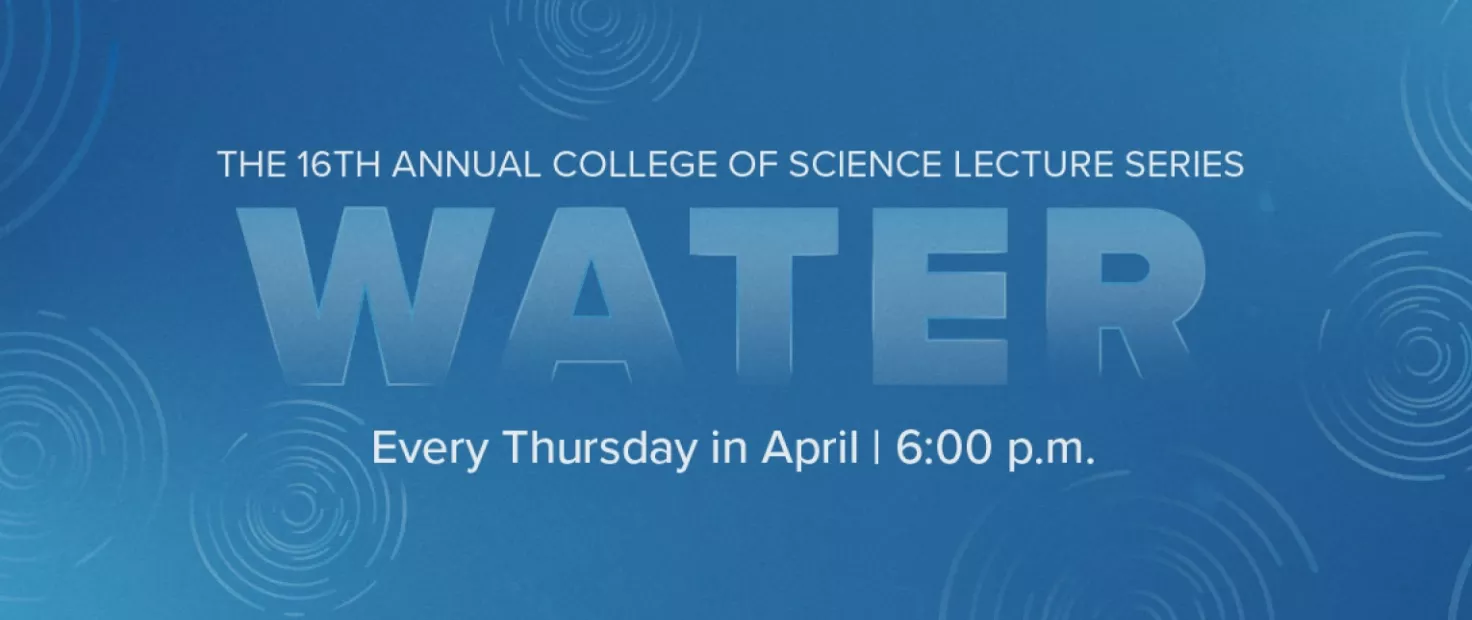
Every Thursday this April, the University of Arizona's College of Science will present a new topic relating to the science of water, as part of their 16th annual lecture series. The free, online lectures will range from the water on Earth's cosmic origins to the challenges of conservation to the Colorado River. The lectures will premiere on the College’s YouTube channel, hosted by various local experts and faculty.
"Given that water is the lifeblood of humankind and recognizing how critical water is to our region, it's both a timely and important topic in our community," said Michael Luria, assistant dean for corporate and community engagement at the College of Science, and co-organizer of the lecture series. "While the effects of the ongoing pandemic have necessitated a virtual format for the 2021 series, it also provides the opportunity to expand our reach to those outside of Southern Arizona, which we are very excited about."
April 1: Beyond Earth
Assistant professors of planetary science Jessica Barnes and Pierre Haenecour discuss the cosmic origins of Earth’s water, and how the exploration of asteroid Bennu by the OSIRIS-REx mission will help show how Earth became habitable.
April 8: Within An Ocean
Assistant professor of geosciences Diane Thompson highlights how historical information can be harnessed to develop and test innovative solutions for increasing the resilience of coral reef ecosystems at Biosphere 2, and help us better understand climate change.
April 15: The Colorado River
Professor in the UA School of Geography, Development and Environment Connie Woodhouse explains the facts of the Southwestern United States' most vital water resource: The Colorado River.
April 22: Beneath Our Feet
Assistant professor of hydrology and atmospheric sciences Laura Condon explains how the water beneath our feet supports ecosystems and human systems alike and the role that it has to play in the future.
April 29: Society and a Changing Climate
Associate professor in the UA School of Geography, Development and Environment Kevin Anchukaitis discusses society's largest climate challenges involving water: both too much, causing flooding, and too little, causing drought. How can lessons from past civilizations illustrate future dangers and potential solutions?
For more information, click here.
WADDELL – Nicholas Watson, 17, has spent the past eight years fine-tuning his esports skills and playing his favorite sports-focused games, including Madden.
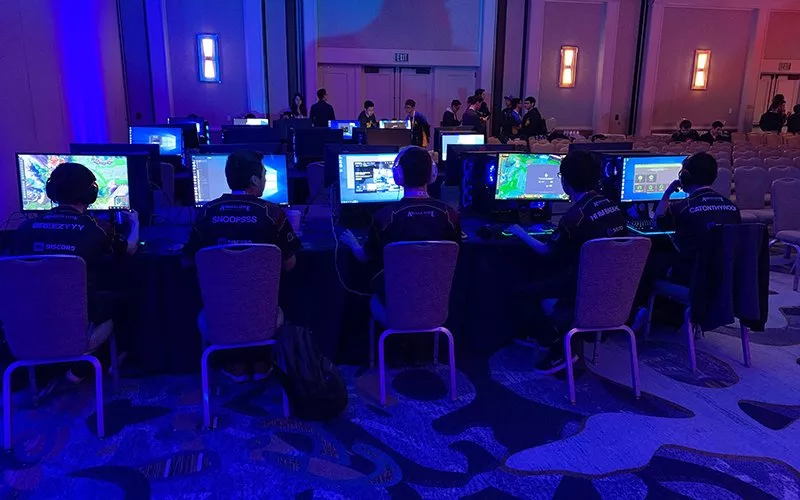
Now, thanks to Special Olympics Arizona and the Arizona Interscholastic Association, Watson plays Rocket League on Phoenix Canyon View High School’s unified esports team, which started its spring season earlier in March.
Unified esports is the equivalent of a high school varsity team with regular season and postseason qualifiers, and athletes are eligible to play at the same state championships as any other high school team. The difference is that unified teams are made up of students with and without intellectual disabilities who come together to create a community of acceptance.
For Watson, the team is creating community, and he’s also learning to play new games like Rocket League, a game that combines cars and soccer.
“Nicholas has so much fun that he just starts to belly laugh,” said Watson’s coach, Nick Swanson. “Like it’s just this contagious laugh when he scores a goal, and he can’t even help himself.”