
Wednesday, March 31, 2021
With 733 new cases reported today, the total number of Arizona’s confirmed novel coronavirus cases neared 842,000 as of Tuesday, March 31, according to the Arizona Department of Health Services.

Pima County, which reported 115 new cases today, has seen 112,667 of the state’s 841,811 confirmed cases.
With 26 new deaths reported this morning, a total of 16,967 Arizonans have died after contracting COVID-19, including 2,351 deaths in Pima County, according to the March 31 report.
A total of 592 coronavirus patients were in the hospital as of March 30. That’s roughly 11% of the number hospitalized at the peak of the winter surge, which reached 5,082 on Jan. 11. The summer peak was 3,517, which was set on July 13, 2020. The subsequent lowest number of hospitalized COVID patients was 468, set on Sept. 27, 2020.
A total of 1,031 people visited emergency rooms with COVID-like symptoms on March 30. That number represents 44% of the record high of 2,341 set on Tuesday, Dec. 29, 2020. That number had peaked during the summer wave at 2,008 on July 7, 2020; it hit a subsequent low of 653 on Sept. 28, 2020.
A total of 164 COVID-19 patients were in intensive care unit beds on March 30, which roughly 14% of the record 1,183 ICU patients set on Jan. 11. The summer’s record number of patients in ICU beds was 970, set on July 13, 2020. The subsequent low was 114 on Sept. 22, 2020.
Pima County, Tucson defy governor, keep mask mandates in place
Pima County's mask mandate remains in effect and health inspectors have the legal authority to enforce mask mandates in food establishments, county officials argued on Tuesday morning.
In a March 26 letter, the Pima County Attorney’s Office informed County Administrator Chuck Huckelberry that Gov. Doug Ducey does not have the legal authority to prevent the County Health Department from enacting reasonable public health measures.
According to Deputy County Attorney Jonathan Pinkney, Resolution 2020-96 mandates everyone in Pima County over the age of 5 must wear a face mask over their nose and mouth, unless they have a qualifying exemption or are able to maintain physical distance. The Board passed the resolution on Dec. 4, 2020.
Pima County Chief Medical Officer Dr. Francisco Garcia said on Tuesday that the board has authority, through an Arizona statute (ARS11-251), to adopt provisions to preserve the health of the county, and the Arizona Supreme Court recognized counties “may enact public health measures that are equal to or more restrictive than ADHS.” Garcia called Ducey’s order an “overreach on the part of the executive.”
Garcia admits the arguments being made are similar to those made in court when local bars sued the county for the mandatory curfew passed on Dec. 15, but believes they stand on “solid ground.” and brushed off concerns about a legal challenge. “Bring it on,” Garcia said.
In consultation with Huckelberry, the county attorney and Garcia, County Health Department Director Dr. Theresa Cullen will continue to instruct health inspectors to enforce the mask mandate in establishments that prepare or offer food. The resolution also covers any establishment open to the public.
Any establishment found to be violating the resolution can be fined $500 per infraction, and potentially face suspension or revocation of its operating permits. Individuals can also be fined $50 per infraction, although the county has not fined anyone so far, said Garcia in a press briefing Tuesday.
“We believe that most operators in this county are doing the right thing," said Garcia. "We believe that most citizens in Pima County are doing the right thing, and we want to continue to give them the tools that they need to be able to continue to demand that people use masks when they are in public spaces."
Despite the continued vaccination effort and the approval of a federal POD that could vaccinate another 210,000 residents, Garcia noted that last week in Pima County, the number of COVID cases increased last week for the first time in 10 weeks.
For the week ending March 21, Garcia reported Pima County had 16 more cases of COVID-19 than the previous week. The previous week saw one more death than the previous week and case numbers would likely change because of the reporting lag.
Garcia said the bump was only one death, "but that person mattered to their family, and any loss of life, which is avoidable, is something that we need to mitigate against.”
Garcia noted the concern over the growing number of COVID-19 variants in the county and Arizona at large, with the South African, UK, Brazilian, and California variants found in Arizona, which may be more transmissible and potentially more harmful.
“One of the silver linings here, though, is that the same kinds of mitigation measures that allow us to prevent transmission for the normal garden variety COVID are going to be the same ones that allow us to prevent transmission with these potentially more infectious more transmissible variants,” said Garcia.
By enforcing a mask mandate, Garcia hopes to “buy time” for Pima County as they continue in their vaccination effort.
"It’s unfortunate that the governor has taken this action, which other people are interpreting as the pandemic is over,” Garcia said.
While he’s sick of it too, Garcia asks people to continue to follow these “relatively easy measures” until the county has achieved a level of community immunity with at least 75 percent of the population vaccinated. "We are not there yet and we cannot pretend that the behaviors that we're engaged in public don't impact the health and well-being of others,” Garcia said.
The county has vaccinated about 28.2 percent of Pima County residents with 455,873 vaccines administered. Garcia estimates that within another two to three weeks, county officials will achieve a level of vaccination that will allow the community to breathe.
“Our goal here isn’t to fight with the governor or fight with the state," Garcia said. "Our goal is to try to do the best thing that we know how to do for the people of Pima County. We will continue to do that and we hope that we will have a healthier community because of that.
Adults older than 16 now eligible for appointments at state vaccine centers; Pima County expands eligibility to anyone with chronic medical condition
All adults older than 16 are now eligible for appointments at state vaccination PODs.
Previously, vaccines were limited to people 55 and older as well as frontline workers, educators, first responders and healthcare workers.
New appointments for the UA POD will open up at 11 a.m. on Fridays, with the Arizona Department of Health Services announcing the number of appointments opening up on Fridays via a Wednesday Twitter post.
As of last week, Pima County expanded COVID-19 vaccine eligibility to anyone 55 and older and anyone older than 16 with at-risk circumstances.
Anyone living with a high-risk medical condition or disability, experiencing homelessness or living in a group setting, or receiving in-home or long-term care can get the vaccine. Some of the high-risk medical conditions include cancer, chronic kidney disease, heart conditions or compromised immunity.
Those in high-risk jobs will also be eligible.
Although the state has expanded eligibility to anyone over 16, Pima County's guidelines had to be limited, said Dr. Theresa Cullen, Health Department director.
“Our decisions are based on the current vaccination rates for 55 and up (which is at 42%), as well as our commitment to ensure ongoing access to vulnerable populations,” Cullen said last week. “We anticipate appointments will be filled quickly and as we move these groups, we look forward to being able to align with the state's recommendations within the next six weeks.”
You can register for your vaccine appointments at a state POD by visiting pod vaccine.azdhs.gov, and those who need assistance can call 1-844-542-8201.
Those who qualify in Pima County’s priority group of eligible vaccine recipients can register for a vaccine at www.pima.gov/covid19vaccineregistration or by calling 520-222-0119.
Many local pharmacies are now receiving vaccine doses. To find one near you, visit the ADHS website.
ADHS will now announce on Wednesdays via Twitter, @AZDHS, and Facebook the approximate number of first-dose appointments available. The Arizona Department of Health Services (ADHS) will release those new COVID-19 vaccination appointments every Friday.
Get tested: Pima County has free COVID testing
Pima County is continuing to offer a number of testing centers around town.
You’ll have a nasal swab test at the Kino Event Center (2805 E. Ajo Way) and the Udall Center (7200 E. Tanque Verde Road).
The center at the northside Ellie Towne Flowing Wells Community Center, 1660 W. Ruthrauff Road, involves a saliva test designed by ASU.
Schedule an appointment at these or other drive-thru or pop-up sites at pima.gov/covid19testing.
The University of Arizona’s antibody testing can determine if you have had COVID and now have antibodies. To sign up for testing, visit https://covid19antibodytesting.arizona.edu/home.
—with additional reporting from Austin Counts, Christina Duran, Jeff Gardner and Mike Truelsen

WASHINGTON – Traffic deaths in Arizona surged during the COVID-19 pandemic, even as the number of miles driven in the state appeared to be decreasing, according to preliminary statistics from 2020.
There were 1,072 deaths on the state’s highways in 2020, the most in at least the past 10 years and a sharp increase from the 980 deaths recorded in 2019, according to preliminary data from the Governor’s Office on Highway Safety.
That increase in highway fatalities came as gasoline sales in the state last year fell 12% from the year before, the biggest one-year percentage drop in sales in almost 40 years of U.S. Energy Information Administration data on sales.
The Arizona numbers mirrored a national trend: A recent report from the National Safety Council said that total motor vehicle deaths in the U.S. rose 8% from the number recorded in 2019, even as miles driven in 2020 dropped 13%.
While the pandemic likely depressed driving, Kenneth Kolosh, manager of statistics at the National Safety Council, pointed to several possible reasons it may also have played a role in “this pretty much unprecedented increase (in fatalities) we’re seeing on the roads today.”
“There is more speeding occurring. This is particularly an issue when the lockdowns were in place and the roads were very empty and we saw large increases in speed, and we’re seeing large increases in speed-related crashes and fatalities,” Kolosh said.
He also said the use of seatbelts “went way down” during the pandemic.
“Being ejected from a crash, one, it’s very life-threatening if you’re ejected from your vehicle during a crash,” said Kolosh, who added that seatbelt use is “one of the most fast and easiest ways you can protect yourself.”
The National Safety Council report said traffic fatalities across the country rose from 39,107 in 2019, when U.S. motorists logged 3.26 trillion miles on the road, to 42,060 in 2020, when total miles traveled dropped to 2.83 trillion.

Tuesday, March 30, 2021
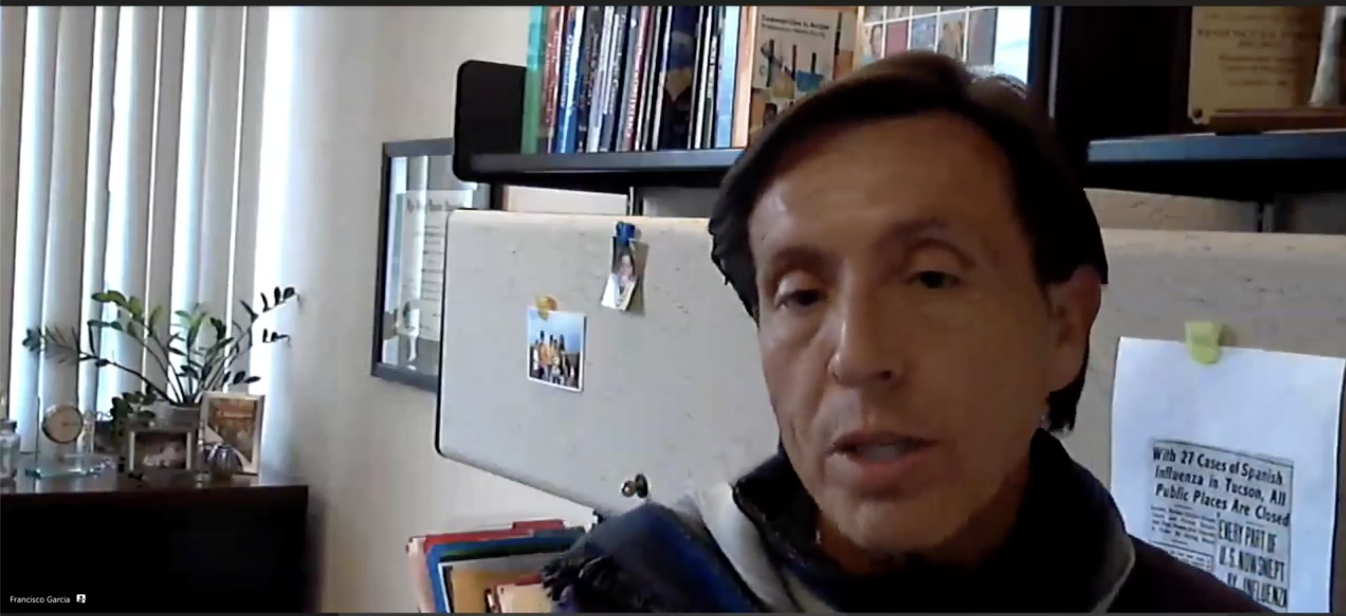
Pima County's mask mandate remains in effect and health inspectors have the legal authority to enforce those mandates in food establishments, county officials argued on Tuesday morning.
In a March 26 letter, the Pima County Attorney’s Office informed County Administrator Chuck Huckelberry that Gov. Doug Ducey does not have the legal authority to prevent the County Health Department from enacting reasonable public health measures.
Everyone in Pima County over the age of 5 must wear a face mask over their nose and mouth unless they have a qualifying exemption or are able to maintain physical distance, according to Resolution 2020-96, said Deputy County Attorney Jonathan Pinkney. The Board passed the resolution on Dec. 4, 2020.
Pima County Chief Medical Officer Dr. Francisco Garcia said the board has authority, through an Arizona statute (ARS11-251), to adopt provisions to preserve the health of the county, and the Arizona Supreme Court recognized counties “may enact public health measures that are equal to or more restrictive than ADHS.” Garcia called Ducey’s order an “overreach on the part of the executive.”
Garcia admits the arguments being made are similar to those made in court when local bars sued the county for the mandatory curfew passed on Dec. 15, but believes they stand on “solid ground.” and brushed off concerns about a legal challenge.
“Bring it on,” Garcia said.
Contrary to Ducey’s statement that mask mandates are neither followed nor enforced, Garcia said Pima County receives complaints through their portal.
He explained the county has a “‘three strikes and you're out” process in place to process complaints. The county receives complaints and works with businesses to resolve the conflict. He said there have been very few cases the county needed to take action.

Aari McDonald will probably never have to pay for another meal in Tucson for as long as she lives. The Arizona Wildcat All-American point guard—an absolute Diminutive Badass—scored 33 points and made a dramatic late-game return to the court after suffering a cringe-inducing ankle sprain to lead Arizona into the Final Four for the first time in school history. With her breathless heroics to help the Cats avoid a second-round upset loss to BYU, followed by her sheer dominance in the Sweet 16 win over Texas A&M and the Elite Eight takedown of Indiana, McDonald firmly cemented her Legend status in UA lore.
McDonald shot a stellar 12-20 from the floor, had four assists and grabbed 11 ridiculous rebounds! She also had the play of the game when a Hoosier had the ball and was going up for a shot. McDonald sneaked inside, executed a lightning-quick “Gimme dat!” steal, and streaked down the court for an and-one lay-up.
It wasn’t entirely a one-person show. Cate Reese and Trinity Baptiste combined for 15 points and 16 rebounds. Defensive stopper Sam Thomas and Spanish sharpshooter Helena Pueyo both hit clutch three-pointers; Pueyo’s came with the score tied in the fourth quarter.
Arizona entered the fourth quarter up by two and won going away, by 13.
Before that “going away” part, there was some serious drama. Driving to the basket, McDonald turned her ankle. It was ugly in real time and got increasingly uglier with each successive slow-motion replay. She was helped off the court, got it taped up, but remained on the bench for a time. When Arizona was having trouble bringing the ball upcourt against the Indiana press, McDonald went back in and immediately took over the game. It was Magical (as in Johnson).
There will be the unavoidable comparisons to the 1988 men’s team that made Arizona’s first trip to the Final Four. To be sure, some of the comparisons are striking. That team reached the ultimate national stage in only Coach Lute Olson’s fifth year in Tucson. For the women’s team, it’s Adia Barnes’ fifth year.
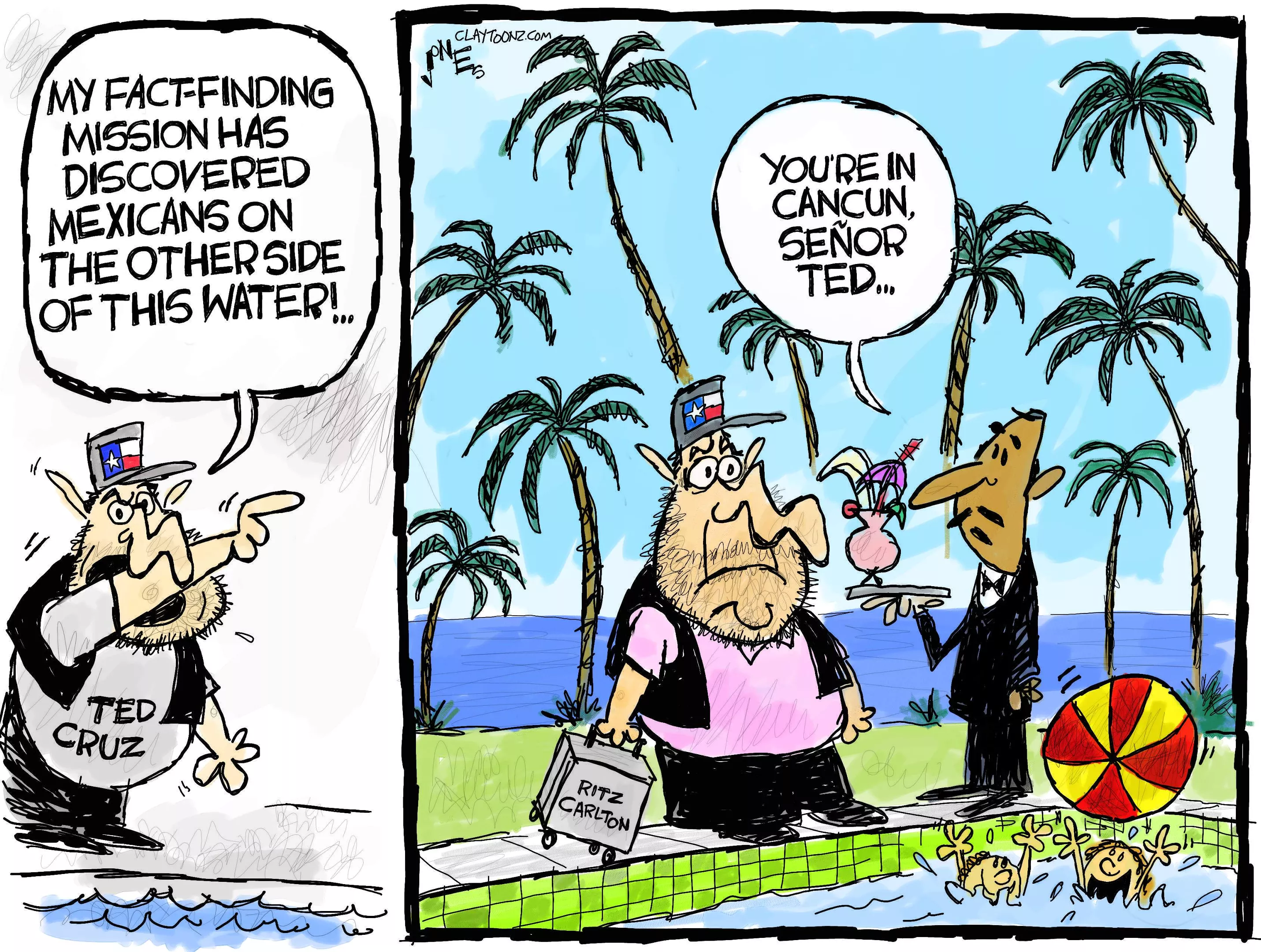

LOS ANGELES – Face masks, plastic bottles and bags – and feces, both dog and human – are some of the unsightly waste you could encounter these days while hiking in the red rocks of Sedona. Discarded masks also litter the beaches of Southern California, which already were battling a growing scourge of plastic and microplastics in the ocean.
Environmentalists fear the situation will get worse as the nation emerges from a year of pandemic restrictions.
With Americans unable to pursue many of the activities they enjoyed before COVID-19 emerged last year, scenic spots across the Southwest have offered a respite and a safer form of entertainment courtesy of the great outdoors. Many natural spots in Arizona were considered essential services during the state’s stay-at-home order, leading to packed hiking trails and facilities. In California, many beaches were closed during the peak summer tourism season but have since reopened, leading to crowds.
The downside of that influx of visitors is increased litter on beaches from San Diego to Malibu, and in favorite Arizona spots like Sedona and Oak Creek Canyon.
Keep Sedona Beautiful Inc., which started in 1972 to protect and sustain the area’s unique environment, has done its best to curb litter with a combination of education, advocacy and litter lifts.
Carla Williams, the nonprofit’s executive vice president, has noticed an uptick in people traveling to Sedona and has seen a major increase in day-trippers and overall travel to red rock country during the pandemic.

With 586 new cases reported today, the total number of Arizona’s confirmed novel coronavirus cases topped 841,000 as of Tuesday, March 30, according to the Arizona Department of Health Services.

Pima County, which reported 85 new cases today, has seen 112,562 of the state’s 841,078 confirmed cases.
With 23 new deaths reported this morning, a total of 16,941 Arizonans have died after contracting COVID-19, including 2,348 deaths in Pima County, according to the March 30 report.
A total of 549 coronavirus patients were in the hospital as of March 29. That’s roughly 11% of the number hospitalized at the peak of the winter surge, which reached 5,082 on Jan. 11. The summer peak was 3,517, which was set on July 13, 2020. The subsequent lowest number of hospitalized COVID patients was 468, set on Sept. 27, 2020.
A total of XXX people visited emergency rooms with COVID-like symptoms on March 29. That number represents XX% of the record high of 2,341 set on Tuesday, Dec. 29, 2020. That number had peaked during the summer wave at 2,008 on July 7, 2020; it hit a subsequent low of 653 on Sept. 28, 2020.
A total of 864 COVID-19 patients were in intensive care unit beds on March 29, which roughly 73% of the record 1,183 ICU patients set on Jan. 11. The summer’s record number of patients in ICU beds was 970, set on July 13, 2020. The subsequent low was 114 on Sept. 22, 2020.
UA moving to larger classes
The University of Arizona will offer larger in-person classes, but with “COVID exhaustion” and multiple variants of COVID-19 on campus, President Robert C. Robbins urged continued compliance with mitigation strategies.
University coronavirus policies will not change despite Gov. Doug Ducey’s lifting of COVID-19 related restrictions last week.
“We are in the fourth quarter of this term, and we need to keep doing what we've been doing that's been so successful and gotten us to this point,” said Robbins in the press briefing Monday morning. “The recent executive order from Gov. Ducey regarding COVID-19 restrictions does not affect university policies, nor does it bar enforcement of these policies.”
He said university face-covering and all other mitigation strategies will remain in place.
Dr. Michael Worobey, head of the university's Department of Ecology and Evolutionary Biology, found a total of 12 cases of the UK variant (B.1.1.7) and two cases of the California variant (B.1.429) on campus within the past two weeks as part of the research using COVID-19 genomic sequencing to track COVID-19 variants.
These variants, which are highly transmissible and have higher mortality rates, may be contagious for a longer period of time, said Worobey.
“When we look at the literature, we can see that the time when people are likely infectious is probably carried over a little bit later with this variant,” said Worobey. “So you've just got more virus that you're putting out into the world, but it's also a combination of that high viral load over a longer period of time, and that really indicates that a slightly longer isolation or quarantine time is really a smart move. We're dealing with a different beast here and we need to act accordingly.”
In response to these new variants on campus. Robbins announced the university would extend the quarantine period from 10 days to 14 days.
“This is really a wake-up call that we're not done yet,” said Worobey. “We still need to, not just maintain, but to some degree redouble our efforts in terms of mitigation measures, wearing those masks, keeping social distance, and everyone getting, as soon as they can, vaccines through our tremendous POD that we have here on campus.” More details here.
Conditions continue to improve but health officials urge caution
Arizona has now seen 10 straight weeks of declining COVID cases and is moving from a period of substantial risk to a period of moderate risk, according to Dr. Joe Gerald, an epidemiologist and professor in the UA Zuckerman College of Public Health.
Gerald noted that for the week ending March 21, 3,993 people tested positive for COVID, a drop of 12% over the previous week’s tally of 4,445.
For Pima County, 426 people tested positive for COVID in the week ending March 21, a drop of 16% over the previous week’s 548 cases. New cases are being diagnosed at a rate of 44 per 100K residents a week, which is lower than the 46% per 100K that Pima County hit during the lowest week during the fall relief between the summer and winter waves.
But Gerald warned that “it is becoming more likely that improvements will stall or reverse owing to more transmissible variants and/or further normalization of business and social activities.”
Gerald said it was reasonable to resume low-risk activities but encouraged residents and businesses to continue to follow public health recommendations to wear masks, physically distance when possible, wash hands and, if medically compromised, stay home as much as possible.
16+ now eligible at state vaccine centers; Pima County expands eligibility to anyone with a chronic medical condition
All adults older than 16 are now eligible for appointments at state vaccination PODs.
Previously, vaccines were limited to people 55 and older as well as frontline workers, educators, first responders and healthcare workers.
New appointments for the UA POD will open up at 11 a.m. on Fridays, with the Arizona Department of Health Services announcing the number of appointments opening up on Fridays via a Wednesday Twitter post. As of last week, Pima County expanded COVID-19 vaccine eligibility to anyone 55 and older and anyone older than 16 with at-risk circumstances.
Anyone living with a high-risk medical condition or disability, experiencing homelessness or living in a group setting, or receiving in-home or long-term care can get the vaccine. Some of the high-risk medical conditions include cancer, chronic kidney disease, heart conditions or compromised immunity.
Those in high-risk jobs will also be eligible.
Although the state has expanded eligibility to anyone over 16, Pima County's guidelines had to be limited, said Dr. Theresa Cullen, Health Department director.
“Our decisions are based on the current vaccination rates for 55 and up (which is at 42%), as well as our commitment to ensure ongoing access to vulnerable populations,” Cullen said last week. “We anticipate appointments will be filled quickly and as we move these groups, we look forward to being able to align with the state's recommendations within the next six weeks.”
You can register for your vaccine appointments at a state POD by visiting pod vaccine.azdhs.gov, and those who need assistance can call 1-844-542-8201.
Those who qualify in Pima County’s priority group of eligible vaccine recipients can register for a vaccine at www.pima.gov/covid19vaccineregistration or by calling 520-222-0119.
Many local pharmacies are now receiving vaccine doses. To find one near you, visit the ADHS website.
ADHS will now announce on Wednesdays via Twitter, @AZDHS, and Facebook the approximate number of first-dose appointments available. The Arizona Department of Health Services (ADHS) will release those new COVID-19 vaccination appointments every Friday.
Get tested: Pima County has free COVID testing
Pima County is continuing to offer a number of testing centers around town.
You’ll have a nasal swab test at the Kino Event Center (2805 E. Ajo Way) and the Udall Center (7200 E. Tanque Verde Road).
The center at the northside Ellie Towne Flowing Wells Community Center, 1660 W. Ruthrauff Road, involves a saliva test designed by ASU.
Schedule an appointment at these or other drive-thru or pop-up sites at pima.gov/covid19testing.
The University of Arizona’s antibody testing can determine if you have had COVID and now have antibodies. To sign up for testing, visit https://covid19antibodytesting.arizona.edu/home.
—with additional reporting from Austin Counts, Christina Duran, Jeff Gardner and Mike Truelsen
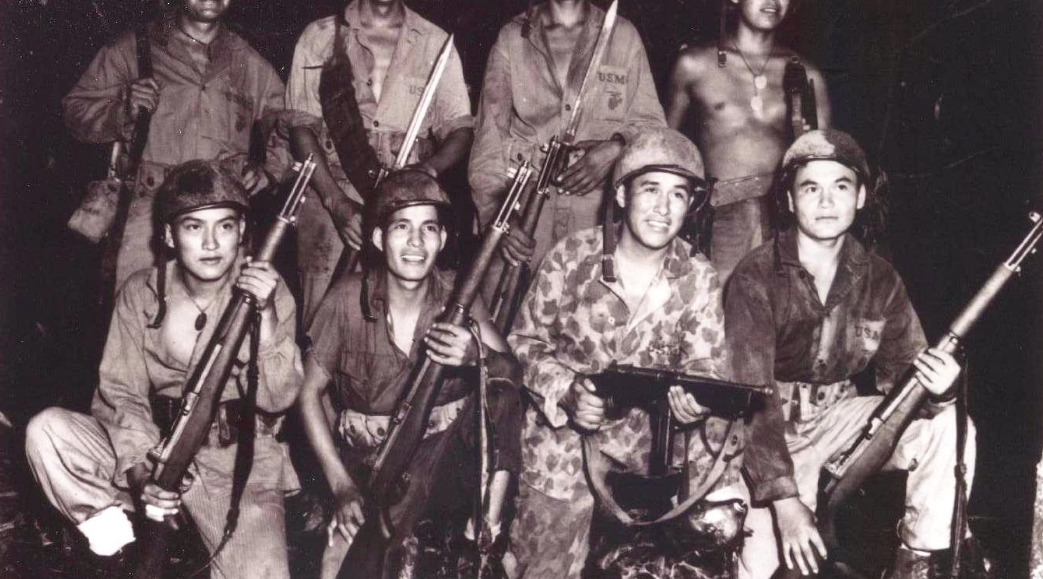
Aug. 14 is now National Navajo Code Talkers Day in Arizona after Gov. Doug Ducey signed legislation on Monday creating the holiday. The holiday honors the courage and critical role Native American Code Talkers played during WWII.
“The Navajo Code Talkers are American heroes,” Ducey said. “They assisted on every major operation involving the U.S. Marines in the Pacific theatre, using their native language to come up with an unbreakable code. More than 400 Code Talkers answered the call to serve our nation, and Arizona is grateful for their dedication to protecting our nation.”
Under Senate Bill 1802, if National Navajo Code Talkers Day falls on a day other than Sunday, the Sunday after Aug. 14 is to be observed as the holiday.
The Navajo code is famously known as the only oral military code that has never been broken. Throughout WWII, the US government recruited and enlisted more than 400 Navajo men to serve in standard communications units. The Navajo Code Talkers were particularly critical in the war's Pacific Theater with one Marine Major stating: "Were it not for the Navajos, the Marines would never have taken Iwo Jima."