

Monday, December 14, 2020

Pima County is expected to receive 11,000 doses of Pfizer's COVID-19 Pfizer on Thursday that will go to healthcare workers and long-term care facility residents and staff, the Pima County Health Department announced at a news conference this morning.
The vaccine prioritization plan includes three phases with the most high-risk individuals receiving the vaccine first, said Dr. Theresa Cullen, director of the Pima County Health Department.
Phase one of vaccine implementation is divided into three groups: 1A, 1B and 1C. Group 1A will begin receiving vaccines this week.
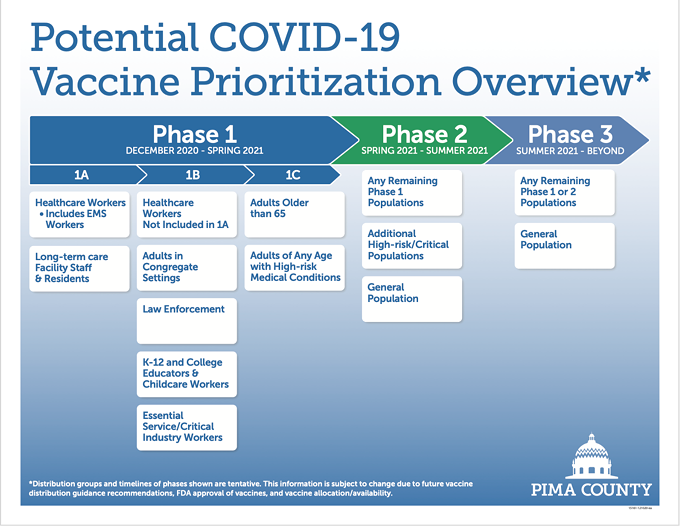
Group 1B, which includes teachers, law enforcement and other essential service workers, are expected to receive vaccines by March, Cullen said.
Group 1C includes adults older than 65 and those with high-risk medical conditions, which contains nearly 70% of the population and is expected to receive vaccinations by “late spring, early summer,” according to Cullen.
The Pfizer vaccine is given in two doses 21 days apart. The health department said if the second dose is not received on its scheduled time, the first dose will still be valid and the recipient is still fully protected.
According to Cullen, the state is holding back the second dose for now but has ensured that those who receive the first dose will receive their second one. However, she said this could cause “a longer time period before we complete immunization of healthcare workers.”
Tucson Medical Center and Banner University Medical Center will serve as “points of distribution,” or PODs, where the first group of healthcare workers will receive the vaccine in drive-thru sites starting Thursday, Dec. 17.
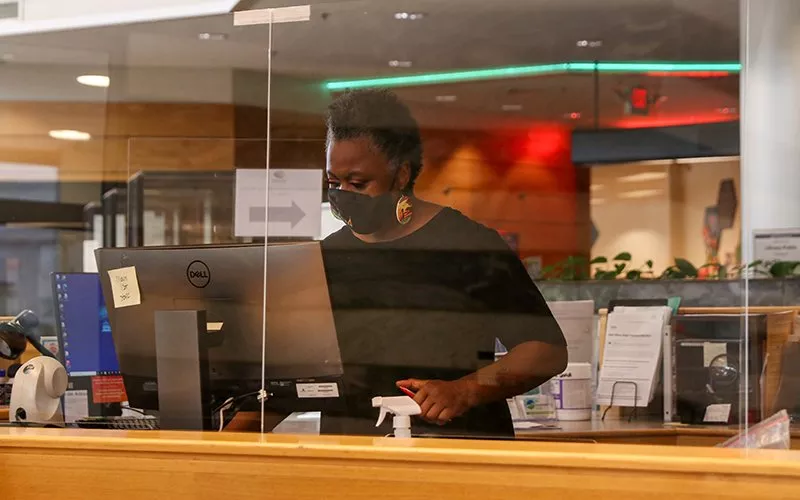
TUCSON – One Saturday morning, a mother and father take their daughter to the public library for the first time. The young girl walks around her parents to look at the librarian at the front desk, gazing at another Black person in a public space that’s usually occupied by white people.
“Do you work here?” she asks.
“I do,” the librarian answers.
“That makes me so happy,” the girl says.
Tenecia Phillips, branch manager of the Joel D. Valdez Main Library in Tucson, tears up at the memory. It’s one of many such moments she has shared with Black families over her nine years with the Pima County Public Library.
“This isn’t a job, this is a calling to me,” said Phillips, who chairs Kindred, a program to diversify Black staffing, events and the collections in Pima County branch libraries.
Although the program is only 3 years old, its founding principles trace to decades of cultural invisibility. The need for better representation of the Black community in libraries, publishing, bookstore ownership and on bestseller lists has gained urgency through a recent wave of social justice movements across the nation.
COVID-19 has reshaped Kindred’s approach to in-person programs to connect Tucson’s Black community like kindred spirits, although it continues to add new titles to its shelves.
In Phoenix, Arizona’s only Black-owned bookstore opened its first online shop to accommodate a swell of orders from new customers, hungry for social commentary as such titles as “How to Be an Anti-Racist” are flying off shelves and topping the New York Times Nonfiction Best Sellers. And one Arizona publisher has welcomed a ripple of first-time authors since March, contributing to a clientele that is more than 98% Black.
Spurred by the recent killings of George Floyd, Breonna Taylor, Ahmaud Arbery and other Black Americans, recognition and representation are at the forefront of society. Some have turned inward, educating themselves on how they’ve contributed to America’s history of systemic racism and reimagining an equitable society.
Phillips, who grew up in Tucson and self-identified as a “nerd,” spent her childhood bonding over books with her father. She said she felt safe in the library – despite rarely seeing other Black people there – and has long understood the importance of diversifying the library system, a profession that is overwhelmingly female and nearly 88% white.
The American Library Association recognizes the racial disparity among librarians and the materials patrons have access to in public collections, especially considering the racial makeup of many communities served by public libraries. Leaders apologized for the systemic racism that threads library systems and in 1970, created the Black Caucus of the American Library Association to help bridge the gap – a goal that’s still in progress.

Some might say that they knew immediately, when, in Kevin Sumlin’s first game as Arizona football coach, his Wildcats played like dookie. Sloppy and listless, unable to take advantage of late-game opportunities, and having to deal with a suddenly mercurial quarterback who quite obviously had seen his own picture on the cover of Sports Illustrated, the Wildcats lost to a barely average visiting BYU team. (BYU would go on to lose home games that season to Utah State and—gulp!—Northern Illinois.)
The loss to BYU was bad enough—putting the Cats in a hole from which they would struggle to emerge the rest of the season—but what troubled some was Sumlin’s reaction to it. Or, more correctly, his lack thereof. Sumlin shrugged like a monk learning dinner would be crackers with no salt.
The next week, Houston smacked Arizona around like it was a bad kid at a Catholic boarding school. Again with the shrug. Suddenly, the season that had had eternally optimistic Wildcat fans engaging in serious debates of 8-4 vs. 9-3, looked bleak.
Arizona, bolstered by a huge upset of powerful Oregon, eventually got back to .500, standing at 5-5 with two games left. But through it all, Shruglin stayed the same. Was he sullen or just pensive? Did he not like to talk or did he have nothing worthwhile to say? Fans hungry for a winner tend to feel that there’s a very fine line between keeping an even keel and not giving a crap.
The Cats took a 40-point whuppin’ from Washington State, but the season was still salvageable. All they had to do was beat visiting ASU in the regular-season finale and all would be good. That win would mean that they had beaten ASU, that they would go to a bowl game, and, most importantly, that they had beaten ASU.
Arizona went into the fourth quarter that day with a whopping 19-point lead and then it all fell apart. Aided by a couple bad turnovers in the wrong part of the field, ASU stormed back to win, 41-40. That’s when I knew. The turnovers were bad (and so was the missed field goal attempt at the gun that would have given the Cats the win), but it was painfully obvious that, in that fourth quarter that determined the fate of the season, Sumlin had been out-coached. Not by ASU Coach Herm Edwards; Sumlin had out-coached himself.
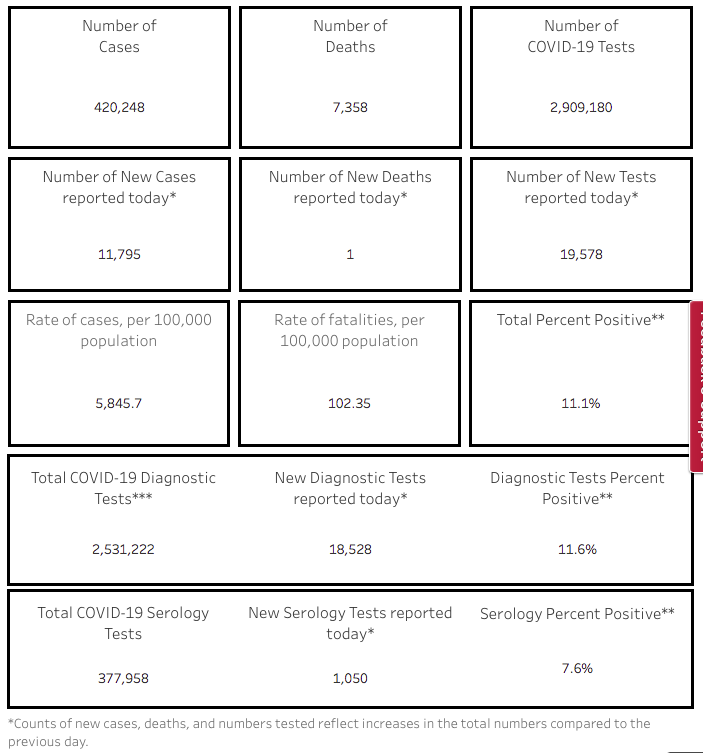
With nearly 12,000 new cases reported today, the number of Arizona’s confirmed novel coronavirus cases topped 420,000 as of Monday, Dec. 14, according to the Arizona Department of Health Services.

Pima County, which reported 1,801 new cases today, has seen 53,448 of the state’s 420,248 confirmed cases.
A total of 7,358 Arizonans had died after contracting COVID-19, including 800 deaths in Pima County, according to the Dec. 14 report.
The number of hospitalized COVID cases statewide continues to soar upward as the virus has begun to spread more rapidly, putting stress on Arizona’s hospitals and surpassing July peaks. ADHS reported that as of Dec. 13, 3,677 COVID patients were hospitalized in the state, setting a new record. The previous peak of 3,517 hospitalized COVID patients was set on July 13; that number hit a subsequent low of 468 on Sept. 27.
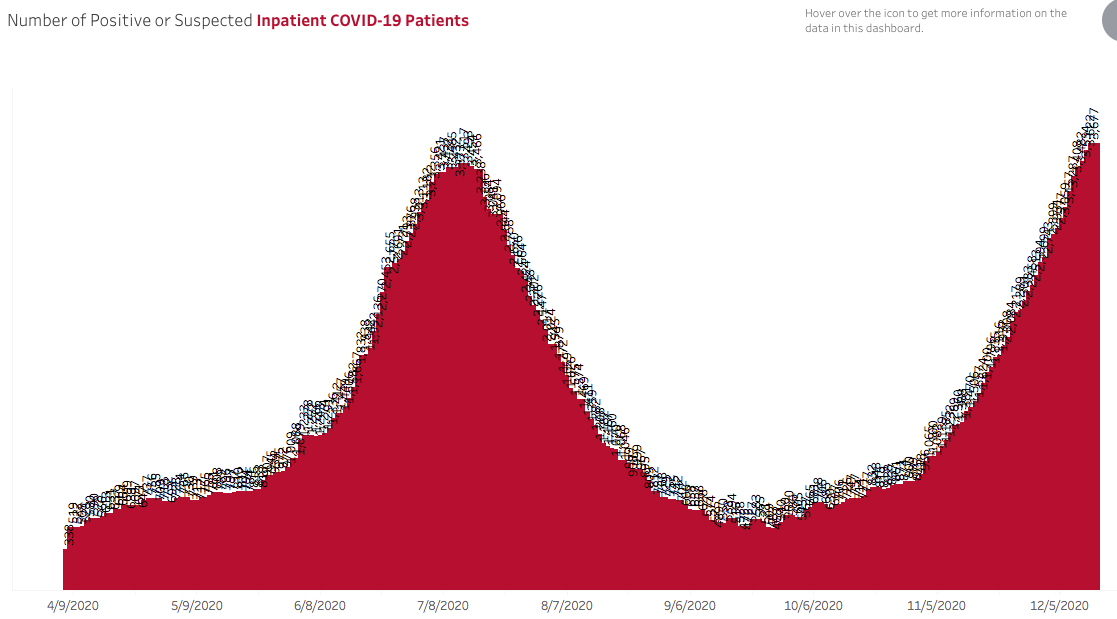
A total of 1,799 people visited emergency rooms on Dec. 13 with COVID symptoms. That number, which hit a new record of 2,166 last week, had previously peaked at 2,008 on July 7; it hit a subsequent low of 653 on Sept. 28.
A total of 829 COVID-19 patients were in intensive care unit beds on Dec. 13. The number of COVID patients in ICUs peaked at 970 on July 13 and hit a subsequent low of 114 on Sept. 22.
Hospitals are reaching capacity; health officials urge people to avoid socializing over holidays
The Pima County Health Department discussed the critical nature of COVID-19 throughout the county at a press conference on Friday, Dec. 10, after it issued a joint letter signed by 26 representatives from the health department, hospitals and fire districts warning residents of disastrous consequences if the spread of the virus continues at its current rate.
Hospitals across the county have less than 2% of their ICU beds available. At the start of the weekend, they had only seven open ICU beds, Pima County Health Director Dr. Theresa Cullen shared at the press conference.
Pima County Chief Medical Officer Dr. Francisco Garcia said the county’s experiencing “very significant” numbers of deaths similar to those seen in the July surge in cases. In terms of hospitalizations, numbers have far surpassed levels seen in the summer peak.
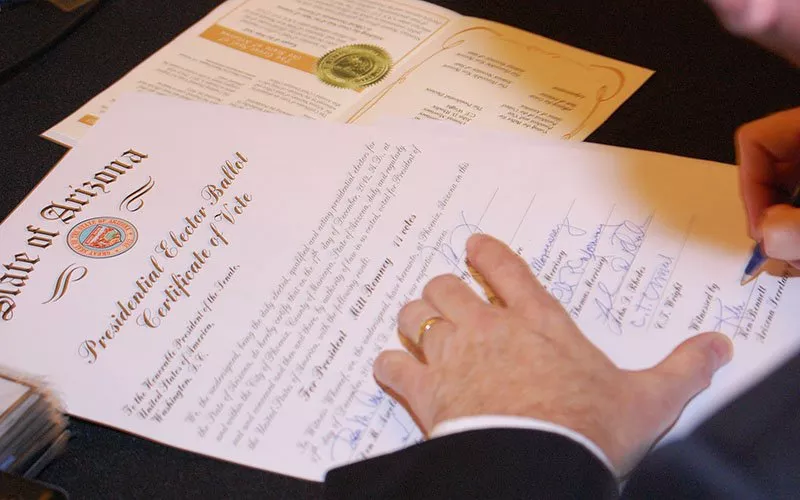
WASHINGTON – Add one more thing to the list of normal activities that have been upended in 2020 – the job of the state’s presidential electors.
What is normally a mundane and largely ceremonial task, often handed out as a reward for loyal party service, has been thrust into the spotlight this year by ongoing Republican challenges seeking to upend the election of President-elect Joe Biden.
“This is a very unusual election cycle in that the Electoral College members have never been challenged like this before,” said Felecia Rotellini, the chair of the Arizona Democratic Party and one of 11 electors scheduled to meet Monday in Phoenix and cast the state’s votes for Biden.
Despite those challenges – the latest of which were rejected by the Arizona Supreme Court and a U.S. District Court in separate rulings last week – Rotellini said she is “confident that our electors will be able to vote on Dec. 14.”
“The process is sound, the selection process is sound. And I believe that we will move forward,” she said. “I have every confidence in our government’s systems of election and so far it is moving smoothly.”
Smooth is how the process works in most years with presidential electors.
When voters cast a ballot for president, they are actually voting for the slate of presidential electors who pledge to vote for that candidate in the Electoral College. Each state gets one Electoral College vote for each of its U.S. senators and House members, and the District of Columbia gets three, for a total of 538 votes – the candidate who gets 270 or more of those votes becomes the next president.
Electors across the country will meet Monday in their state capitals to cast separate votes for president and vice president, which have to be delivered to the Senate by Dec. 23. The next Congress will meet in joint session on Jan. 6 to count the ballots and the winner will be inaugurated on Jan. 20.
Typically, the only excitement is whether an elector will go rogue and not vote for the party’s candidate – an issue that flared up in 2016, when a handful of so-called “faithless electors” for both President Donald Trump and Democratic nominee Hillary Clinton voted for someone else.

Saturday, December 12, 2020

TUSD Board member Adelita Grijalva, who just won a seat on the Pima County Board of Supervisors last month, announced tonight that she has tested positive for COVID-19.
Grijalva revealed in a press release that she had tested positive on Wednesday, Dec. 9, and is now isolating in Tucson.
Grijalva said she was asymptomatic and learned of her diagnosis via regular testing. She is unaware of when and where she contracted the virus.
Grijalva is the daughter of Congressman Raul Grijalva, who tested positive for the coronavirus in August.
County officials have warned that the coronavirus is widespread in the area and healthcare workers and public health experts are asking people to stay home as much as possible and mask up when they leave their homes when they cannot maintain physical distance from others.
The Arizona Department of Health Services reported 8,076 new cases of COVID-19 today, taking the total number of cases in Arizona since March to 402,589. The state set a new record yesterday as 3,534 people were hospitalized with COVID symptoms. The previous record, 3,517 COVID patients, was set on July 13.
Friday, December 11, 2020
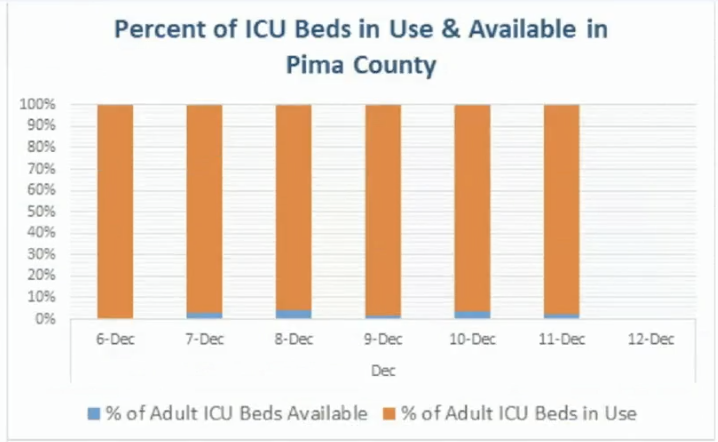
The Pima County Health Department discussed the critical nature of COVID-19 throughout the county at a press conference today after it issued a joint letter signed by 26 representatives from the health department, hospitals and fire districts warning residents of disastrous consequences if the spread of the virus continues at its current rate.
Hospitals across the county have less than 2% of their ICU beds available. Today, they had only seven open ICU beds, Pima County Health Director Dr. Theresa Cullen shared at the press conference.
Pima County Chief Medical Officer Dr. Francisco Garcia said the county’s experiencing “very significant” numbers of deaths similar to those seen in the July surge in cases. In terms of hospitalizations, numbers have far surpassed levels seen in the summer peak.
Judy Rich, the president and CEO of Tucson Medical Center, said on the outside, the hospital shows serene Christmas lights and often barren parking lots. The parked cars are diminishing as visitors aren’t allowed to visit their sick loved ones, and behind the glowing lights, the hospital’s staff is fighting an unprecedented number of cases while facing high levels of burnout.“The staff are tired, and they are giving everything that they have. It is imperative that we take this seriously. This is a serious disaster that is invisible to many,” Rich said. “But when it hits you, when it becomes personal, you'll understand it differently. I would just ask you to project to that and take the steps that you need to to stay safe and help our community get through this.”
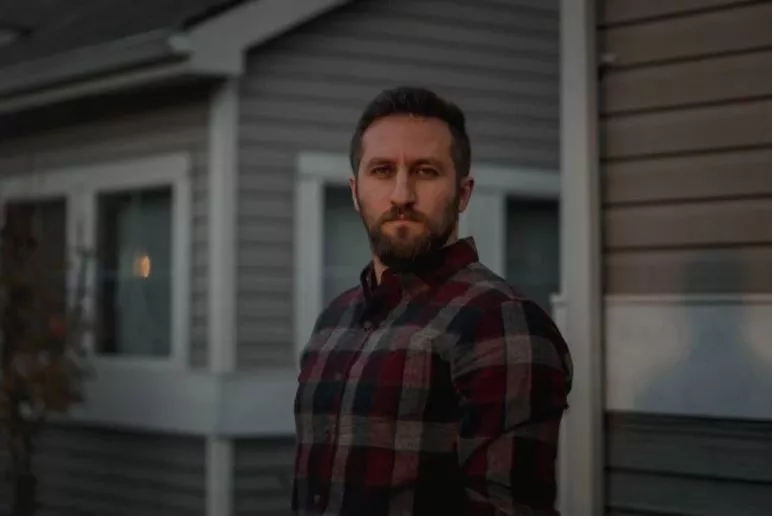
State unemployment agencies have been demanding recipients repay thousands of dollars, even if the agency made the mistake and the money’s already been spent. After ProPublica investigated the practice, legislators are trying to end it.
Rep. Jaime Herrera Beutler, R-Wash. and Rep. Stephanie Murphy, D-Fla., have introduced a bill that would shield unemployed workers from having to return federal pandemic unemployment assistance benefits when agencies have mistakenly paid them these funds. The legislation, submitted on Dec. 2, came in the wake of an article by ProPublica in October that exposed the debts and anguish faced by workers who have been overpaid by state unemployment agencies (which administer both state and federal payments), sometimes as a result of the state’s mistakes. The agencies, the article showed, have variously garnished paychecks or taxed refunds to obtain repayment, while others charged interest on the debt.“I’m grateful to ProPublica for investigating the fallout of poorly managed unemployment benefit programs,” Herrera Beutler said. “I realize state unemployment agencies have been given a tall task, but that’s no excuse for the level of incompetence and unresponsiveness they’ve demonstrated in delivering congressionally approved unemployment benefits.”
As ProPublica reported, states are allowed to grant hardship waivers to individuals who mistakenly receive an overpayment of state unemployment benefits. But the law is different when it comes to benefits paid by the federal government. The Pandemic Unemployment Assistance program, created by the CARES Act in March, bans debt forgiveness. This means that millions of American workers who are self-employed or hold nontraditional work schedules — categories that were not eligible for unemployment benefits until the PUA was established — can be held liable for a mistake made by an unemployment agency.
HR 8812, the Relief for Working Families Act, would change that, allowing states to extend waivers to PUA overpayments in cases where the individual receiving the jobless benefits is not at fault and such repayment would create further financial hardship.
The legislation would ease the plight of people like Ahmad Ghabboun, who was the focus of ProPublica’s article. Ghabboun was a freelance driver for Amazon Flex and Uber in Washington state, and he lost work during the pandemic. He was deemed eligible for aid under PUA and the CARES Act but was told, months later, to repay the state’s Employment Security Department $14,990 after accidentally stating that he could work from home — as a driver, he clearly could not — in one of his weekly online applications for benefits.
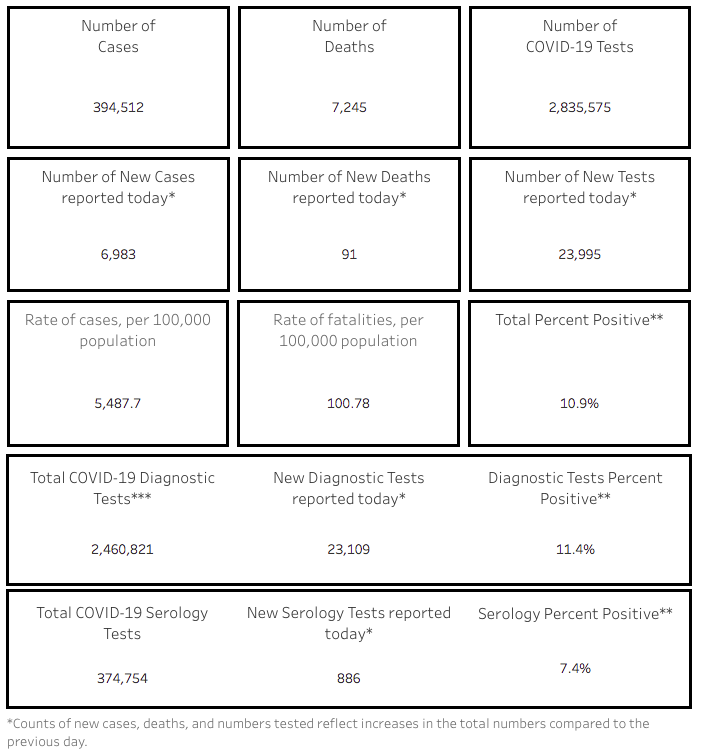
With more than nearly 7,000 new cases reported today, the number of Arizona’s confirmed novel coronavirus cases topped 394,000 as of Friday, Dec. 11, according to the Arizona Department of Health Services.

Pima County, which reported 866 new cases today, has seen 49,637 of the state’s 394,512 confirmed cases.
With 91 new deaths reported today, a total of 7,245 Arizonans had died after contracting COVID-19, including 776 deaths in Pima County, according to the Dec. 11 report.
The number of hospitalized COVID cases statewide continues to soar upward as the virus has begun to spread more rapidly, putting stress on Arizona’s hospitals and closing in on numbers not seen since July peaks. ADHS reported that as of Dec. 10, 3,482 COVID patients were hospitalized in the state, the highest that number has been since July 14. That’s close to the peak of 3,517 hospitalized COVID patients on July 13; that number hit a subsequent low of 468 on Sept. 27.
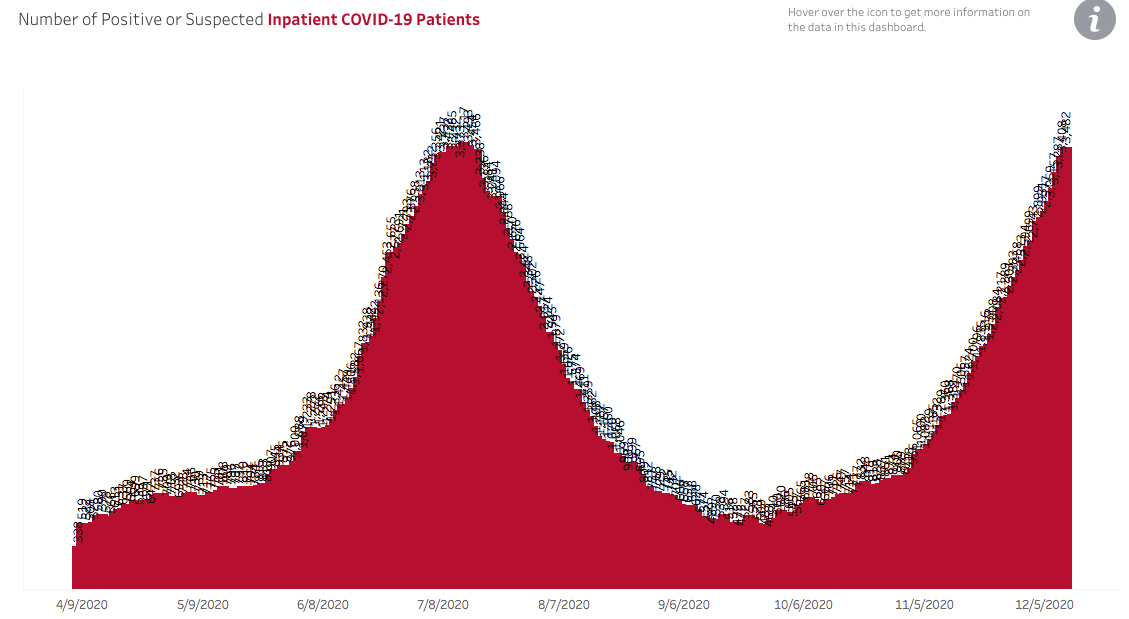
A total of 2,120 people visited emergency rooms on Dec. 10 with COVID symptoms. That number, which hit a new record yesterday, had previously peaked at 2,008 on July 7; it hit a subsequent low of 653 on Sept. 28.
A total of 809 COVID-19 patients were in intensive care unit beds on Dec. 10, the highest that number has been since July 26. The number of COVID patients in ICUs peaked at 970 on July 13 and hit a subsequent low of 114 on Sept. 22.
Pima County has seen a dramatic rise in cases in recent weeks, according to an Dec. 4 report from the Pima County Health Department. (Numbers in this report are subject to revision.) For the week ending Nov. 7, 2,119 cases were reported; for the week ending Nov. 14, 2,578 cases were reported; and for the week ending Nov. 21, 3,313 cases were reported, setting a new record for a weekly count.
“In the last week, we've had the most cases we've reported in a week,” Dr. Theresa Cullen, the director of the Pima County Health Department. “We've had the most cases we've ever reported in a day. And as you can see, this number is significantly more than what we had in the summer when we were worried. That's why we need to worry more and more.”

