

Friday, December 11, 2020
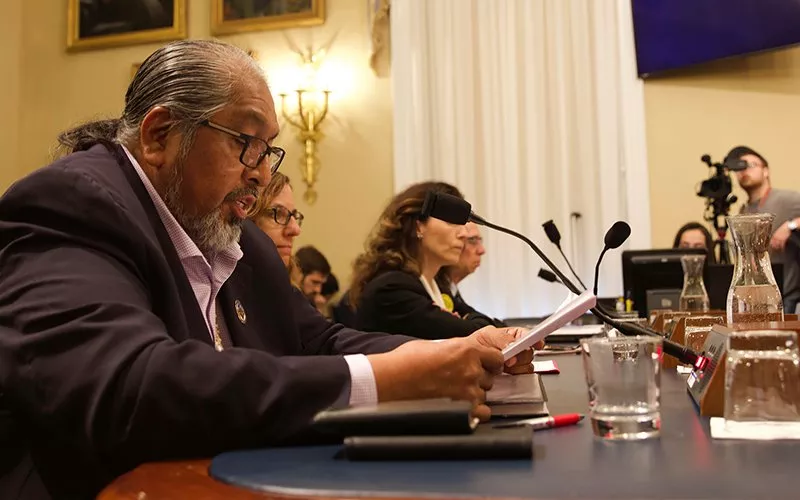
WASHINGTON – In what a former Arizona elector called “a sweet irony,” the slate of 11 Democratic presidential electors who will cast Arizona’s Electoral College votes Monday includes three tribal leaders.
Gila River Indian Community Gov. Stephen Roe Lewis, Navajo Nation President Jonathan Nez and Tohono O’odham Nation Chairman Ned Norris Jr. will join eight other Democrats to cast the state’s votes for President-elect Joe Biden and Vice President-elect Kamala Harris.
While it may have been a sweet irony, however, it was no accident.
Arizona Democratic Party Chair Felecia Rotellini said she wanted to choose electors who would “represent the diversity of Arizona, and the diversity of Arizona voters, as well as Arizona Democratic voters.” That included the three tribal leaders with “deep roots to our state.”
“The three leaders of the tribes that we selected are also great partners with the Arizona Democratic Party in terms of helping us to promote candidates that reflect the values that we all believe in – the values that were on the ballot in this election,” Rotellini said. “Without their leadership, we wouldn’t be where we are today.”
Norris did not respond to requests for comment and Lewis declined. But Nez called being chosen an elector is “a big honor.”
“I’m overjoyed and happy to cast the Navajo electorate vote for Joe Biden and Kamala Harris,” he said.

Thursday, December 10, 2020
PHOENIX – Step inside Biosphere 2’s tropical rainforest, which thrives beneath an enormous glass dome, and visitors are met by a wall of warm humidity and lush greenery. The sprawling complex north of Tucson in Oracle provides climate-change researchers with unique opportunities to test theories in ways that would be impossible in the field.
This is where a team of ecologists recently found that tropical forests may be more resilient to rising temperatures than originally predicted. The key isn’t the heat but the humidity, according to the study, which was published in October in the journal Nature Plants.
Biosphere 2 – constructed by Space Biospheres Ventures in 1986 for Earth research and the development of “self-sustaining space-colonization technology” – now is a living, breathing laboratory for University of Arizona scientists.
Marielle Smith, a postdoctoral research associate at Michigan State University and the lead author of the study on tropical rainforest resilience, called the tropical rainforest biome a “bewildering wall of green.”
Smith, who has studied in natural rainforests as a tropical ecologist, said researching in the rainforest biome at the Biosphere 2 – so named because Earth is the original biosphere – facility feels comfortable.
“It’s humid, it’s hot, you’re taking measurements in there and you get a sweat up just like you would in a real tropical forest,” she said.
The enclosed biome in Biosphere 2 allows scientists to control the environment in ways not possible in natural rainforests. With the ability to change such factors as humidity and temperature, the researchers can better understand the impacts of climate change on tropical rainforests, which play a vital role in the planet’s health by absorbing carbon dioxide and releasing oxygen.
The Amazon rainforest plays a pivotal role in combating climate change by absorbing 2 billion tons of carbon dioxide each year, about 5% of annual emissions, according to climatologists. CO₂ is a main contributor to rising temperatures across the world.
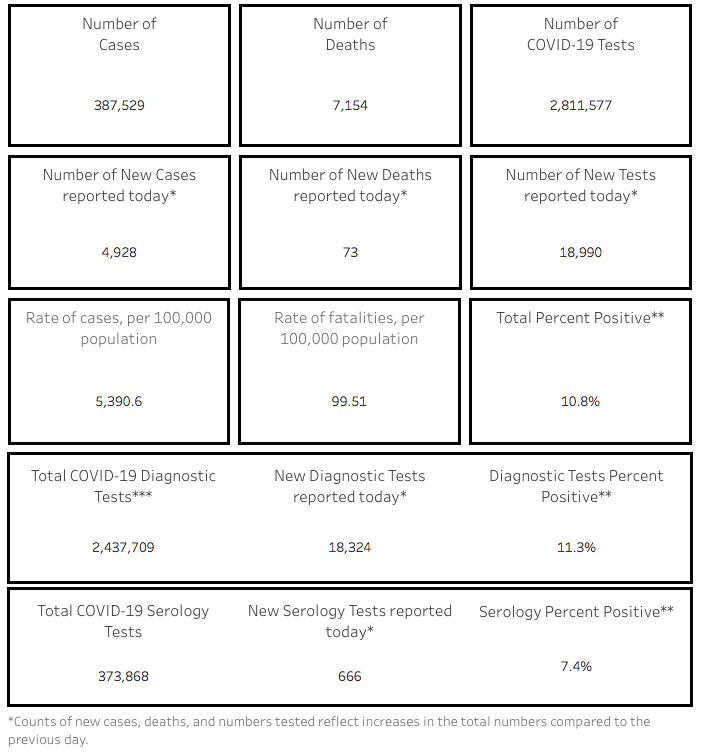
With more than 4,400 new cases reported today, the number of Arizona’s confirmed novel coronavirus cases topped 387,000 as of Thursday, Dec. 10, according to the Arizona Department of Health Services.

With 73 new deaths reported today, a total of 7,154 Arizonans had died after contracting COVID-19, including 62 deaths in Pima County, according to the Dec. 10 report.
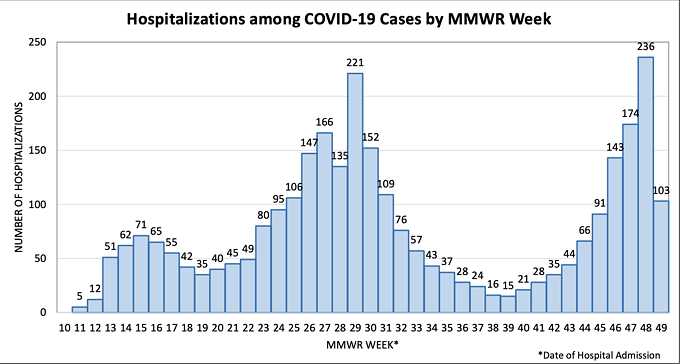
The number of hospitalized COVID cases statewide continues to soar upward as the virus has begun to spread more rapidly, putting stress on Arizona’s hospitals and closing in on numbers not seen since July peaks. ADHS reported that as of Dec. 9, 3,408 COVID patients were hospitalized in the state, the highest that number has been since July 16. That’s close to the peak of 3,517 hospitalized COVID patients on July 13; that number hit a subsequent low of 468 on Sept. 27.
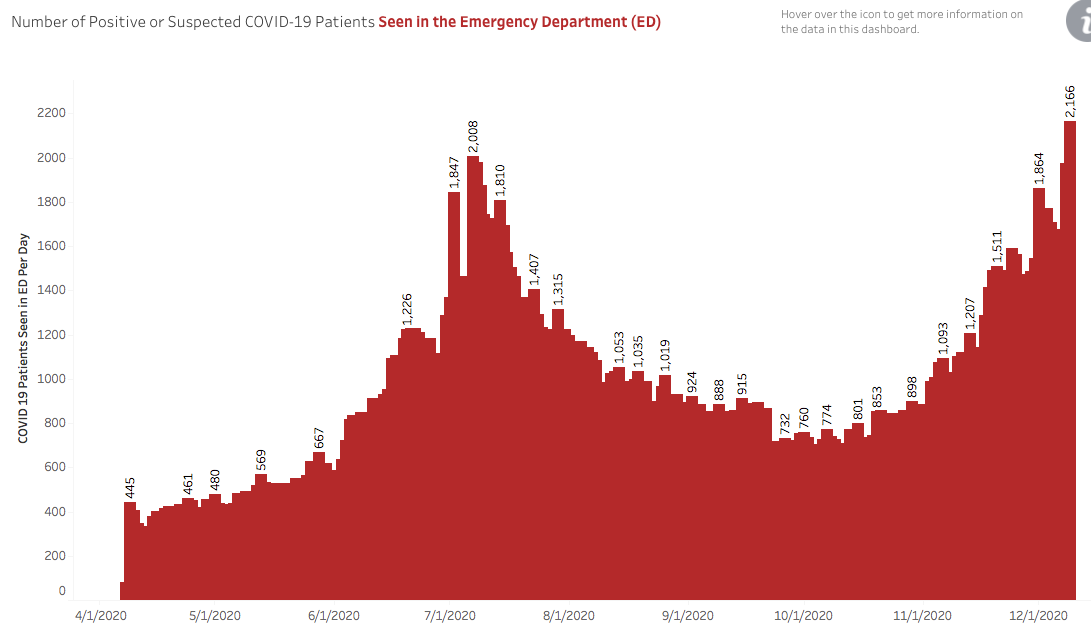
A total of 2,166 people visited emergency rooms on Dec. 9 with COVID symptoms. That is a new record for that number, which previously peaked at 2,008 on July 7; it hit a subsequent low of 653 on Sept. 28.
A total of 799 COVID-19 patients were in intensive care unit beds on Dec. 9, the highest that number has been since July 28. The number of COVID patients in ICUs peaked at 970 on July 13 and hit a subsequent low of 114 on Sept. 22.
Pima County has seen a dramatic rise in cases in recent weeks, according to an Dec. 4 report from the Pima County Health Department. (Numbers in this report are subject to revision.) For the week ending Nov. 7, 2,119 cases were reported; for the week ending Nov. 14, 2,578 cases were reported; and for the week ending Nov. 21, 3,313 cases were reported, setting a new record for a weekly count.
WASHINGTON – Rep. Debbie Lesko, R-Peoria, said it can be hard to be socially distant when a large part of your job requires being social.
From interacting with constituents to boarding planes between D.C. and Arizona to voting on the House floor, Lesko said it’s challenging for members of Congress to limit possible exposure to the coronavirus.
“My job is one where I have to meet with people, where I have to go out in public,” Lesko said in a virtual interview. “They’re usually right in my face, so I can’t really control if people are going to wear masks or not.”
So Lesko home-quarantined in November after she was exposed to someone who later tested positive for COVID-19, even though she did not display any symptoms of the virus. And she is not alone.
Four of Arizona’s nine House members have quarantined since the start of the outbreak, either because they were exposed or because they tested positive themselves. Except for states with just one House member, Arizona has the highest percentage of delegation members who have quarantined.
Overall, at least 71 House members have quarantined because they tested positive for COVID-19 or may have been exposed to the virus, according to GovTrack.us. That’s about one House member in six.

Wednesday, December 9, 2020
Arizona is on track to receive 383,750 COVID-19 vaccines by the end of December, according to a news release from Gov. Doug Ducey’s office.
Over the weekend, the Arizona Department of Health Services ordered the first shipment, which is expected to arrive next week, according to the release.
The vaccines will go to Pima and Maricopa counties in the first week of distribution, with Pima receiving 11,000 doses and Maricopa receiving 47,000.
The state’s distribution plan for the vaccines prioritizes health care workers, residents of long-term care facilities, educators and vulnerable populations. The federal government ships COVID-19 vaccines based on states’ populations, and the release says “ADHS will promptly order vaccine doses” as they become available.
In the second week, vaccines will be distributed to all 15 counties and four tribes, according to the release.
The Centers for Disease Control and Prevention and the Pharmacy Partnership program will also receive doses the second week for vaccination at skilled nursing facilities. According to the release, all of Arizona’s skilled nursing facilities opted to participate in the CDC program that will vaccinate all residents and staff in the facilities.
“Throughout Arizona, health care professionals including doctors, nurses, emergency medical technicians, pharmacists and more are partnering to administer the vaccine.”

The Pima County Health Department distributed a mass alert Wednesday informing the public of its renewed public health advisory as COVID-19 cases reach alarming levels.
The message was sent to those who signed up for emergency alerts and revealed coronavirus transmission rates are “extremely high” and that local hospitals have reached or are nearing capacity, according to a news release from the health department.
In the message, the health department echoed the COVID-19 mitigation guidelines strengthened by the Board of Supervisors on Dec. 4. These include the continuation of the county’s mask mandate and tougher enforcement for those who don’t comply.
Other guidelines designed to slow the spread of the virus include:
Adhering to a curfew from 10 p.m. to 5 a.m. In Tucson, this curfew is mandatory.
Staying at home as much as possible.
Maintaining a 6-foot distance from those not in your immediate household.
Frequent hand washing and sanitization.
Limiting public and private gatherings of individuals from separate households.
The mass alert comes as Pima County reported 7,711 coronavirus cases in the first nine days of December. According to a news release from Rep. Ann Kirkpatrick, health experts predict at least 500 weekly COVID-19 deaths in the state by January.
“The news of rising cases and deaths is alarming,” Kirkpatrick said in the release. “We must continue to follow the guidance of health professionals in order to alleviate the stress on our hospitals, which are reaching capacity. Arizonans, please continue to socially distance, wear a mask around others, and wash your hands. We will only get through this if we commit to the cause, together.”

Originally from Tucson, Tanner moved to Phoenix when she was young, but returned here to attend the University of Arizona. The songs on Antares serve as a kind of timeline for Tanner over the past few years: changing her major, moving through relationships, speculating on perspectives. And with an extended quarantine, she suddenly had the time to put all the pieces together.
Entirely self-written, recorded and produced, Antares is a lonesome album, but it would be a disservice to simply call it depressing. With a soulful voice and simple instrumentation, Tanner does share her personal woes, but jumps between characters and perspectives in the stories she sings. While most of the songs come off as listless, the jumps between acoustic guitar- and piano-driven tracks add color—or perhaps another shade of gray.
Although the album wasn’t released under her own name, Tanner leaves little between herself and the listener.
“I try to be a pretty open person,” Tanner said. “I know a lot of artists will come up with a persona, but that didn’t feel fitting. It’s very autobiographical, so it would have felt disingenuous to introduce myself as someone other than who I am.”
The songs have never been performed live. In fact, Tanner says she only recently felt comfortable singing in front of friends and family. She admits it might come as a surprise to many of her friends that she’s recorded an album at all. But her dark, mellow voice hints at experience—or at the very least comfort—with her singing and storytelling abilities. Antares’ rawness does result in some production hiccups, but more than anything else they manage to add to the album’s style.
“On one hand, I almost didn’t put anything else because I was thinking: ‘How is this different than a million other people who are doing an acoustic recording?’” Tanner said. “But this is what I needed to do.”
Nurses from Tucson Medical Center are imploring the public to help slow surging COVID-19 rates as hospitals approach capacity, compromising the ability to treat patients.
Pima County alone has reported 7,711 coronavirus cases in the first nine days of December. Hospital admissions are rising to higher levels than during the summer surge.
Along with a letter from its nurses, TMC is launching a campaign titled “#InThisTogether,” asking the public to adhere to safety measures while spotlighting care providers in a social media campaign.
"We’ve held the hands of patients because their families can’t. We’ve watched as cases soar, as schools close and as the hospital nears or reaches capacity almost daily. Yet, we keep going.” -TMC Nurse Managers
tweet this
“We’ve been here for you when you need us the most for more than 75 years. Now, we need you. We work day in and day out caring for our community, then we go home to care for our own families, scared we might bring the virus home and worried about what the future will bring,” the letter said. “We’ve held the hands of patients because their families can’t. We’ve watched as cases soar, as schools close and as the hospital nears or reaches capacity almost daily. Yet, we keep going."
The nurses acknowledged that following coronavirus safety protocols can be tiresome, but as workers on the frontline of the pandemic, they’re experiencing much more dire consequences.
“We are tired, too. We are tired of seeing young people, our elders and everyone in between on ventilators. We are tired of watching people we know get sick from this virus,” the letter said. “Our co-workers are getting sick and we are short-staffed. It is becoming more difficult to transfer patients who have critical needs to hospitals that have ICU capacity for greater levels of care.”
According to the letter, TMC has activated surge plans to expand COVID-19 bed capacity while recruiting healthcare workers to care for an increasing number of patients.
The letter said the upcoming weeks are critical to slow the spread and give hospitals a chance to catch up.
“Our community has done so much, but now is not the time to give up. We are spending our holidays caring for sick patients. We are asking you, our beloved community, to think about your loved ones and make a few more sacrifices.
“Please heed the advice of public health experts by washing your hands, wearing your mask in public and staying home with your families. Please stop socializing in person with multiple households for a while.”
The letter from nurse managers Judy Rich, Mimi Coomler and Joy Upshaw pleads with the public to continue following safety guidelines in a joint effort between healthcare staff and the community they care for.
“We need our community to rally behind us. We need support and encouragement. We need each other. We are in this together, and we will get through this together.”
To our community, We are writing this letter from the front lines of TMC HealthCare. We are not strangers. We are your...
Posted by Tucson Medical Center on Wednesday, December 9, 2020

