

Friday, October 2, 2020
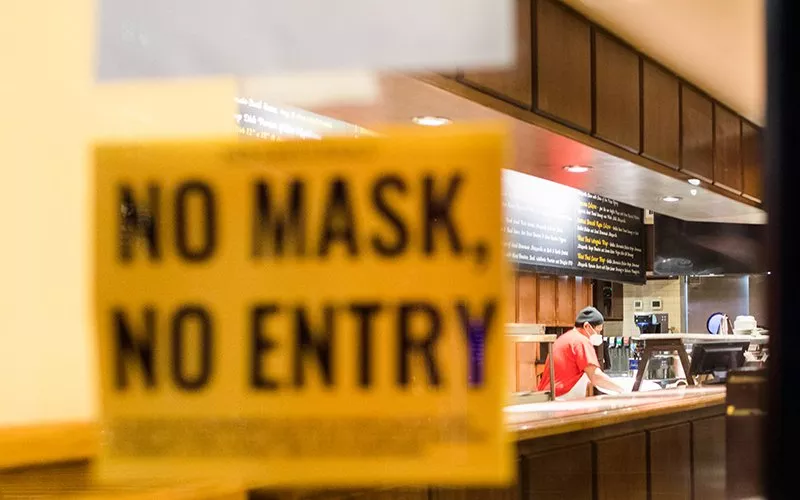
WASHINGTON – Arizona officials hailed a COVID-19 milestone Thursday, when the final county in the state crossed a coronavirus transmission threshold that lets some shuttered businesses begin the process of reopening.
The Arizona Department of Health Services said Graham County moved from the “substantial” to “moderate” transmission category, in which businesses such as restaurants, waterparks and movie theaters can reopen if they put health safeguards in place.
The reopenings are phased and officials said there will be little immediate change in people’s lives or livelihoods. But they still welcomed the news and cautioned against backsliding “in such a manner that we would have to take more stringent public health measures,” one official said.
Thursday, October 1, 2020

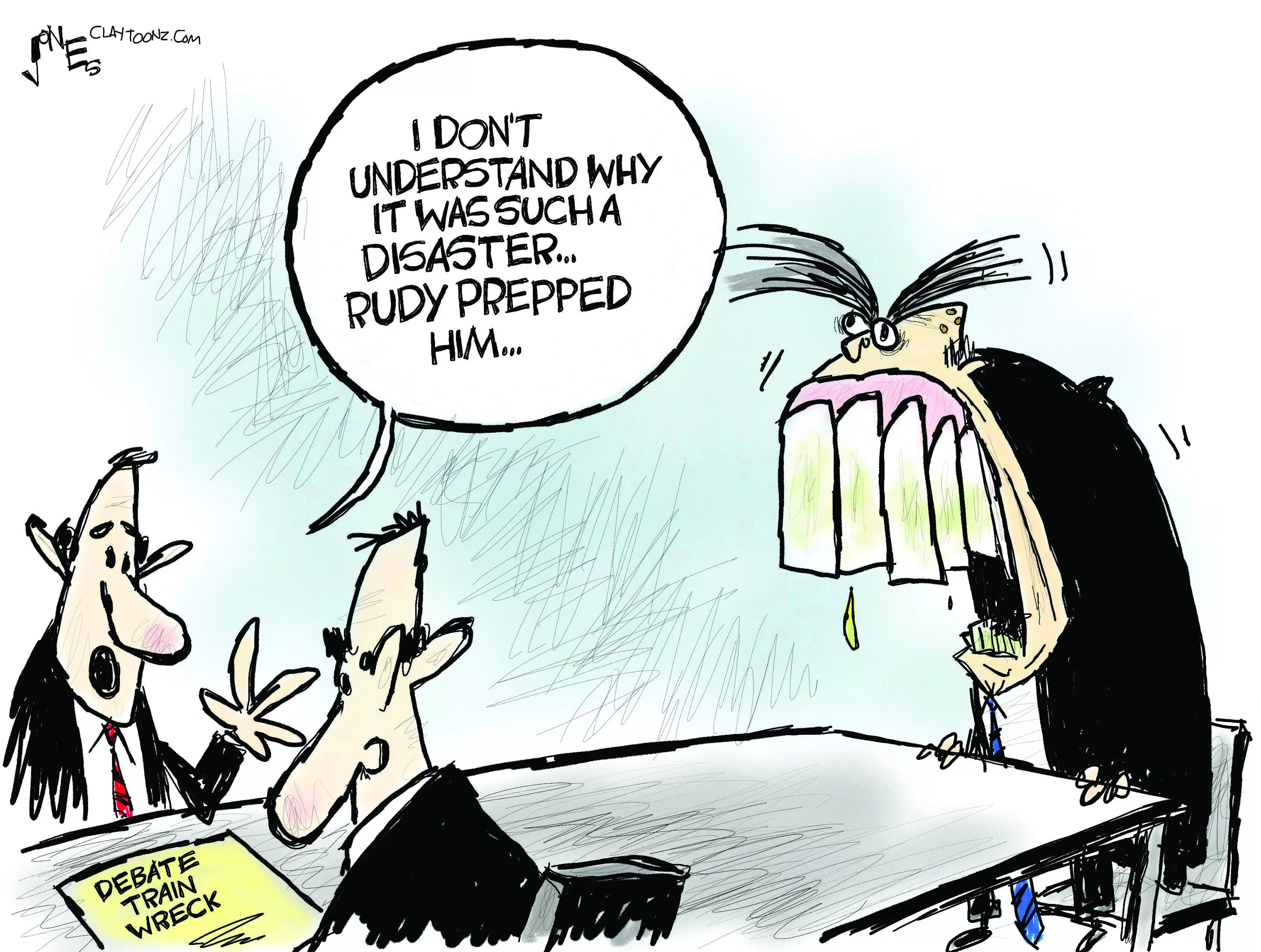
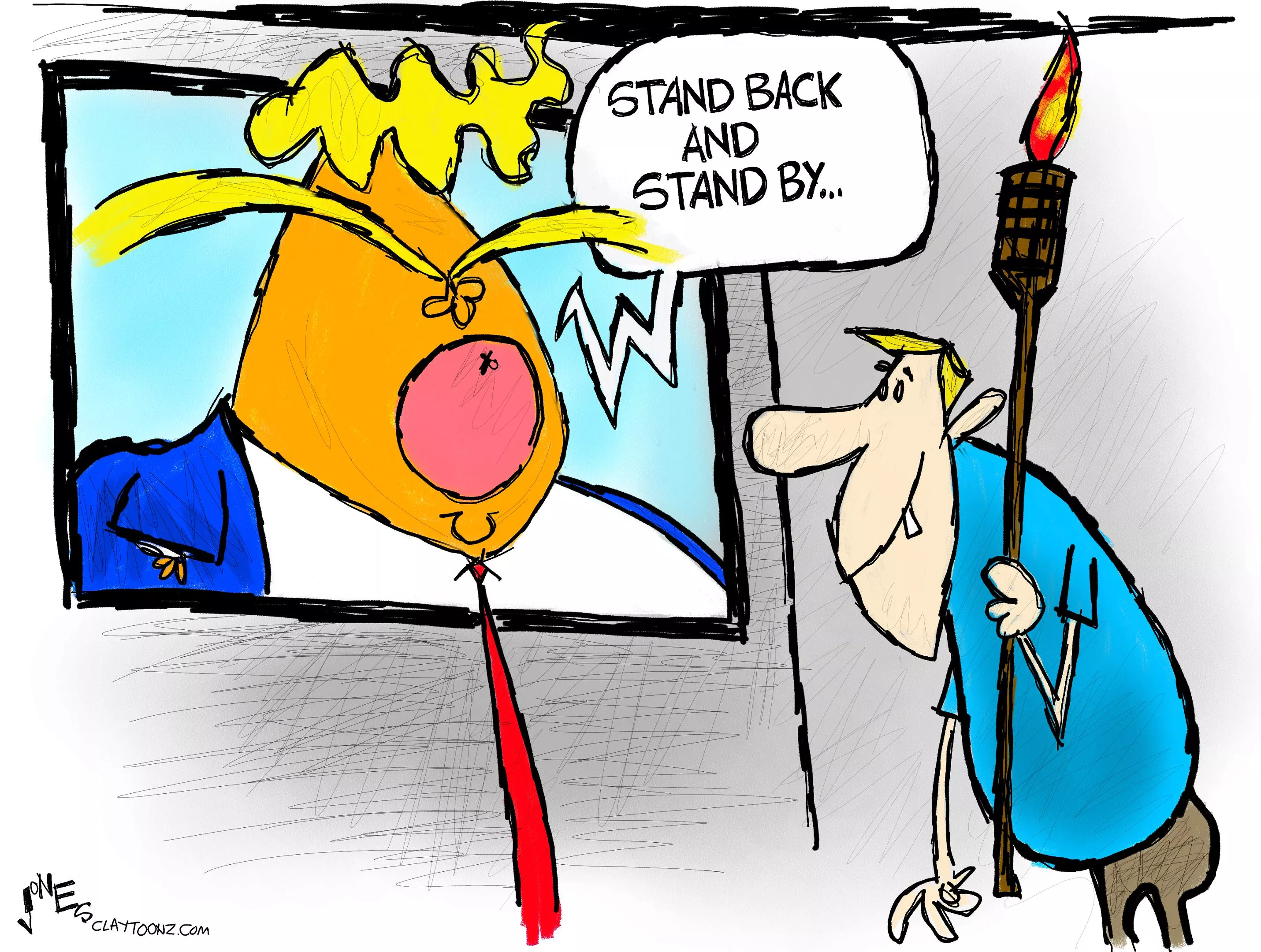
WASHINGTON – President Donald Trump on Wednesday defended his debate comments on the right-wing extremists known as the Proud Boys, but reaction from officials in Arizona ranged from dismissal to dismay.
The furor began Tuesday night during the nationally televised debate with Democratic presidential nominee Joe Biden, when Trump was asked to condemn violent groups like the Proud Boys. He said they should “stand back and stand by,”
That set off alarm bells for Rep. Ruben Gallego, D-Phoenix, a Marine veteran who said others in the audience immediately noticed Trump’s choice of words.
“We Marines know what it means to be told to ‘stand by.’ It means get ready to fight,” Gallego tweeted. “Trump’s words tonight are a dangerous call to get ready for action. We need to heal this country, not divide it more.”
Tags: proud boys , trump , biden , election , white supremacy , Image
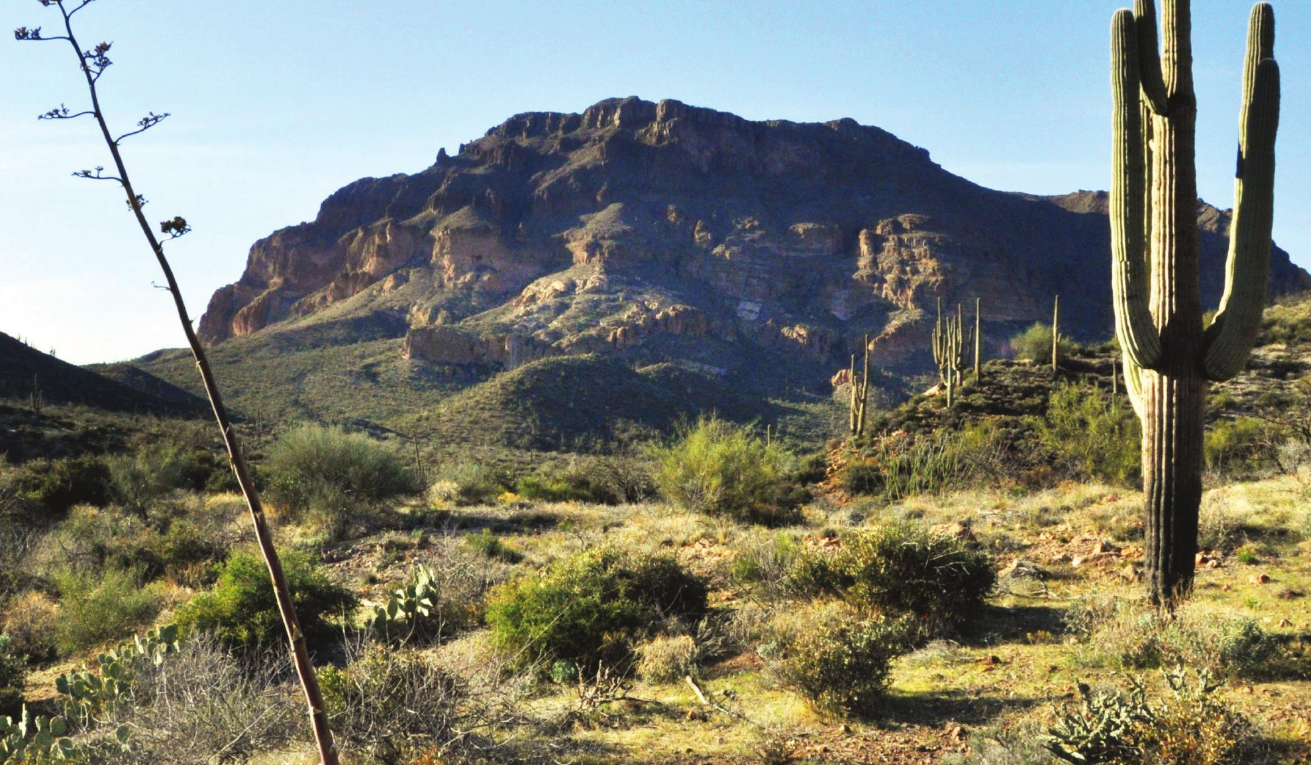
This makes 2020 the second driest monsoon since the weather records began in 1895. In fact, 2020 was only .03 inches from being the single driest monsoon ever, an honor that belongs to the 1924 monsoon, which saw 1.59 inches. 1924 and 2020 are also the only monsoons on record with less than 2 inches of rain.
On a monthly breakdown, June generally sees .15 inches, July sees 2.25 inches, August sees 2.39 inches, and September sees 1.29 inches. For 2020, June had no rain, July had .46 inches, August had 1.16 inches, and September had trace amounts.
Luckily, this weak summer rain is not a trend in recent years. While monsoon 2019 also saw below average rainfall, 2015 through 2018 all saw above-average monsoonal rains, with 2017 seeing nearly 50 percent more rain than average.
However, rainfall is only one part of the equation. August 2020 was also Tucson’s hottest month ever recorded since 1895, beating the previous record set by … July 2020. Both months combined to make this summer the hottest in all 125 years of weather records. According to NWS data, this August held a combined average temperature of 92 degrees. This July held a combined average of 91.5. Before these last two months, the hottest average month was July 2005 at nearly a full degree lower.
The average August temperature over the last 125 years is 84.7 degrees, and the average July temperature for the same range is 86.5. These temperatures are not daily highs, but averages over the entire month—highs and lows. And while these last two were the hottest months on average, the maximum temperature recorded on a single day in Tucson was in June 1990 at 117 degrees.
“The trend is for warmer," said John Glueck, senior forecaster for NWS Tucson. "We’ve had hotter summers for a good period of time now, and that’s something we’ll just have to get used to with a warming climate."
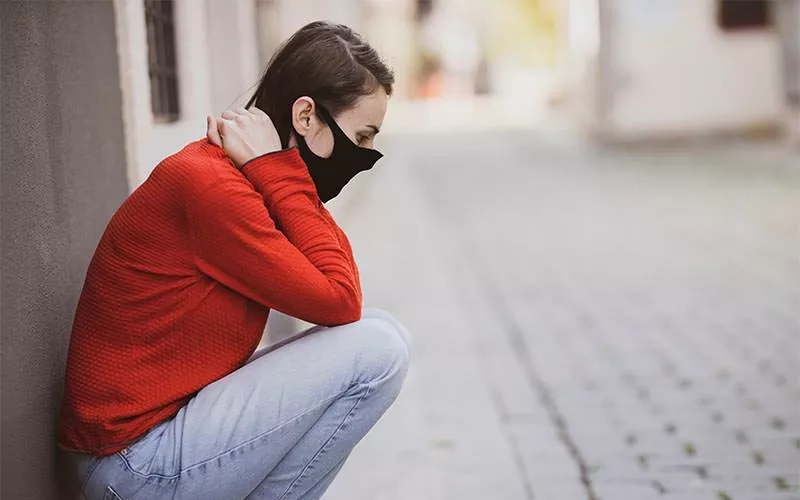
PHOENIX – Arizona ranks close to last in the nation when it comes to available mental health care providers – a problem that’s been underscored during a pandemic that is increasing anxiety and depression.
Heather Ross, a clinical assistant professor at Arizona State University who advises Phoenix Mayor Kate Gallego on health policy issues, said the state also lacks sufficient beds and inpatient facilities to treat patients with mental health challenges.
Still, she added: “You can build a building, you can stick a bed in a room, but unless you have the professionals to deliver the care, those beds almost don’t matter.”
Arizona ranks 47th among all 50 states and the District of Columbia in the rate of available mental health care providers, according to the latest report by the nonprofit group Mental Health America. The state’s ratio of 790 people for every 1 provider compares with Massachusetts’ leading rate of 180 to 1.
Providers include psychiatrists, psychologists, licensed clinical social workers, counselors, marriage and family therapists, and advanced practice nurses specializing in mental health care.
All 15 counties in Arizona include places considered Health Professional Shortage Areas specifically for mental health, according to data from the U.S. Department of Health and Human Services.
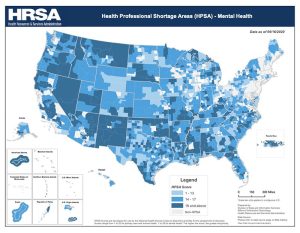
Map of Health Professional Shortage Areas – Mental Health
The Navajo Nation is ranked as one of the highest areas of need. A 2017 study by Northern Arizona University’s Center for Health Equity Research found that the ratio of people to mental health providers in Navajo County, which includes a section of the Navajo reservation, was a whopping 1,504:1.
These provider shortages are especially concerning given the job losses, isolation and grief people are experiencing during the COVID-19 pandemic, Ross said. The Navajo Nation has been hit hard by the deadly disease, with more than 10,000 cases and 550 deaths, while statewide cases have surpassed 200,000, with more than 5,600 deaths.
Ross said it’s vital the dearth of behavioral health providers is addressed, because a mental health problem can affect every aspect of one’s life.
“It’s not like when you sprain your elbow and you can wear a sling,” she said. “You can’t put a Band-Aid on it and put it aside. It’s always with you.
“In a perfect world, every person who was experiencing mental illness, behavioral disorders or crisis would reach out … and would have a mental health professional immediately available.”
A June survey by the Centers for Disease Control and Prevention documented how COVID-19 has increased mental health problems, particularly in younger adults, people of color, essential workers and unpaid adult caregivers. These groups have reported experiencing worse mental health, increased substance use and elevated suicidal ideation.
One organization trying to help is Flagstaff’s Stronger as One, a collaborative effort among several Coconino County organizations to create a culture of knowledge, compassion and action around mental health and well-being.
The group offers mental health first-aid training to identify, understand and respond to mental health crises or substance abuse issues.
Although not a replacement for the help of a licensed professional, those trained can serve as a first stopping point for people who need care, especially in areas where providers are limited.
“We’re working to normalize talking about it and make people aware of the regional resources that are there,” said Erica Shaw, Stronger as One program manager.
In partnership with the Arizona Department of Education, about 65 people in northern Arizona have been trained to date, Shaw said.
A bill to provide financial aid to students who commit to enter the mental health care workforce was introduced during the 2020 Arizona legislative session but didn’t make it out of committee.
The bill would have expanded the Arizona Teachers Academy program to provide scholarships ranging from $3,000 to $10,000 a year for students who agree to become social workers or counselors in Arizona public schools.
The measure’s sponsor, Sen. Sean Bowie, D-Phoenix, told Cronkite News he plans to reintroduce the proposal when the new legislative session begins in January.
Mental health conditions have worsened since the pandemic was declared in March, but even before then, reports of anxiety and depression had been on a “scary but steady increase,” said Mark Carroll, chief medical officer of Health Choice Arizona in Flagstaff.
Now, with some of the financial impacts of COVID-19, people may be putting their mental health on the back burner.
“If I don’t have stable housing or I don’t have money for reliable and consistent food on my table,” Carroll said, “other things are just not going to be a priority for me and it’s going to impact my health in general. And it’s going to have a significant impact on my mental health and well-being.”
Health Choice Arizona provides health coverage to over 200,000 people across Apache, Coconino, Maricopa, Mohave, Navajo, Gila, Yavapai and Pinal counties.
The 2017 NAU study noted that access alone isn’t the only barrier to getting mental health treatment. Stigma and cultural differences also play a role. Some respondents living in smaller communities said they feared the risk of being recognized when seeking care.
Historical trauma among Native Americans also can lead to a deep sense of hopelessness, the study found.
“Each different culture has a different way of approaching wellness and well-being and overall mental health. You can’t overlook that,” Shaw said. “You have to respect their cultural history … and meet them where they are.”
Shaw hopes to see the momentum of change and sharing of resources continue, especially as the pandemic goes on.
“We have this tendency to say, ‘Suck it up, brush it off, it’s no big deal, just snap out of it.’ But you don’t tell someone with cancer to snap out of it. So there’s this fundamental misunderstanding of the nature of mental health,” Shaw said.
“Ultimately, our mission is to build a culture of knowledge, compassion and action for mental health and well-being, so that we can all live better, healthier lives – together.”
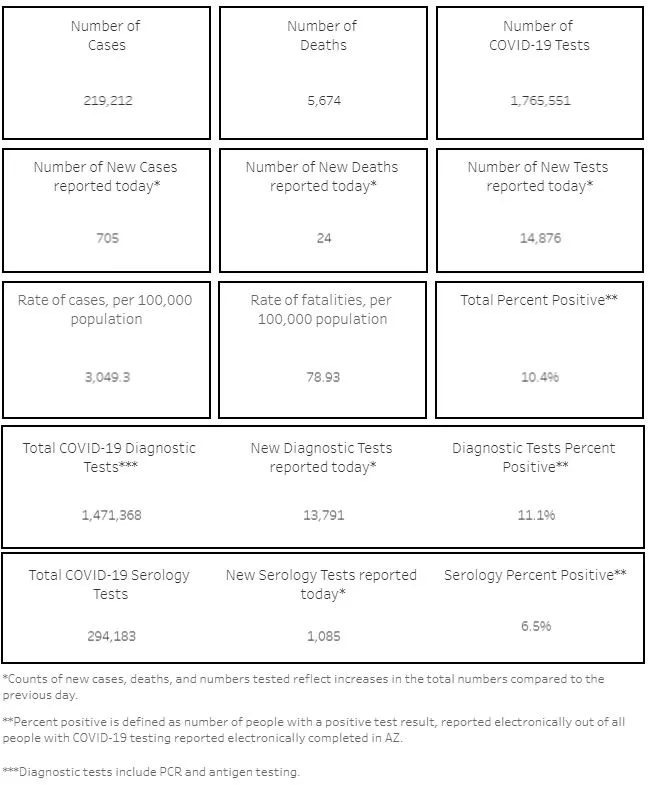
With 705 new cases reported today, the number of Arizona’s confirmed novel coronavirus cases reached 219,212 as of Thursday, Oct. 1, according to the Arizona Department of Health Services.
Pima County had seen 25,706 confirmed cases.
With 24 new deaths today, a total of 5,674 Arizonans had died after contracting COVID-19, including 620 deaths in Pima County, according to the Sept. 30 report.

The number of hospitalized COVID cases continues to inch back up. ADHS reported that as of Sept. 30, 620 COVID patients were hospitalized in the state, up from 560 the day before. The number of hospitalized COVID patients peaked at 3,517 on July 13.
A total of 753 people visited emergency rooms on Sept. 30 with COVID symptoms. That number peaked at 2,008 on July 7.
A total of 122 COVID-19 patients were in intensive care unit beds on Sept. 30. The number of COVID patients in ICUs peaked at 970 on July 13.
On a week-by-week basis in Pima County, the number of positive COVID tests peaked the week ending July 4 with 2,453 cases, according to a Sept. 25 report from the Pima County Health Department. While a vocal minority continues to insist that masks do no good, the spread of the virus began to decline within weeks of Pima County’s mask mandate, as more people began wearing them in public, although the level of new cases has creeped back up in recent weeks with the return of UA students. For the week ending Aug. 29, 569 new cases were reported; for the week ending Sept. 5, a total of 861 cases were reported; for the week ending Sept. 12, 1,103 cases were reported; for the week ending Sept. 19, 1,203 cases were reported. (Recent weeks are subject to revision.)
Deaths in Pima County are down from a peak of 55 in the week ending July 4 to 19 for the week ending Aug. 15, 13 in the week ending Aug. 22, 10 in the week ending Aug. 29, zero in the week ending Sept. 5, and two in the week ending Sept. 12. (Recent weeks are subject to revision.)
Hospitalization peaked the week ending July 18 with 234 COVID patients admitted to Pima County hospitals. In the week ending Aug. 29, 37 COVID patients were admitted to Pima County hospitals; in the week ending Sept. 5, 25 patients were admitted to Pima County hospitals; in the week ending Sept. 12, 19 patients were admitted; and in the week ending Sept. 19, 14 patients were admitted. (Numbers are subject to revision.)
Get a Flu Shot
The Arizona Department of Health Services is implementing an aggressive plan of action during this flu season by distributing free flu shots vaccination to all Arizonans through doctor’s offices, pharmacies, local health departments and community healthcare centers statewide.
The overlap with COVID produces greater challenges than a typical flu season and preventing the flu is more important than ever. More than 4,000 people were hospitalized with flu symptoms in Arizona last year and roughly 700 people die from the illness each year, according to state health officials.
The state will reimburse Arizona Health Care Cost Containment System providers offering free flu shots to AHCCCS members, while giving AHCCCS members a $10 gift card for their troubles after they've been vaccinated.
Get tested: Pima County has several testing centers, UA offering antibody testing
Pima County has three free testing centers with easy-to-schedule appointments—often with same-day availability—with results in 24 to 72 hours.
You’ll have a nasal swab test at the Kino Event Center, 2805 E. Ajo Way, and the Udall Center, 7200 E. Tanque Verde Road. The center at the northside Ellie Towne Flowing Wells Community Center, 1660 W. Ruthrauff Road, involves a saliva test designed by ASU.
Schedule an appointment at pima.gov/covid19testing.
The centers are also tied into Pima County’s developing contact tracing operation, which aims to be able to identify potential clusters and warn people if they have been in contact with someone who is COVID-positive.
The University of Arizona’s antibody testing has been opened to all Arizonans as the state attempts to get a handle on how many people have been exposed to COVID-19 but were asymptomatic or otherwise did not get a test while they were ill.
To sign up for testing, visit https://covid19antibodytesting.arizona.edu/home.
—with additional reporting from Nicole Ludden, Austin Counts, Jeff Gardner and Mike Truelsen

Wednesday, September 30, 2020
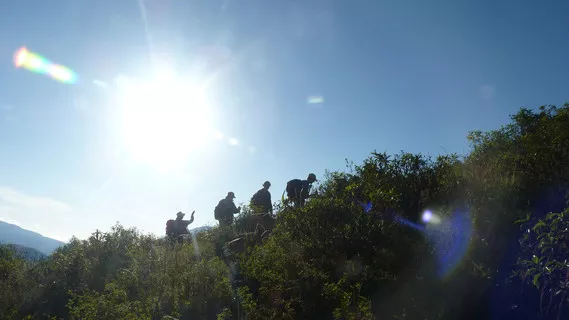
Pima County Parks and Rec continues to reopen outdoor areas in the wake of this summer's Bighorn Fire, which burned more than 100,000 acres in the Catalina mountains north of Tucson. The trails are open to the burn scar from the fire, so hikers should be aware that hazards still exist. The trailheads that feed into the Santa Catalina Mountains in the Coronado National Forest that are now open are:
- Iris Dewhirst Pima Canyon, 1598 E. Magee Road
- Richard McKee Finger Rock, 7119 N. Alvernon Way
- Ventana Canyon, 6601 N. Resort Drive
- Bear Canyon, 5150 N. Bear Canyon Road
This announcement comes days after Pima County reopened access to Sabino Canyon Recreation Area, however, the tram and facilities there remain closed.
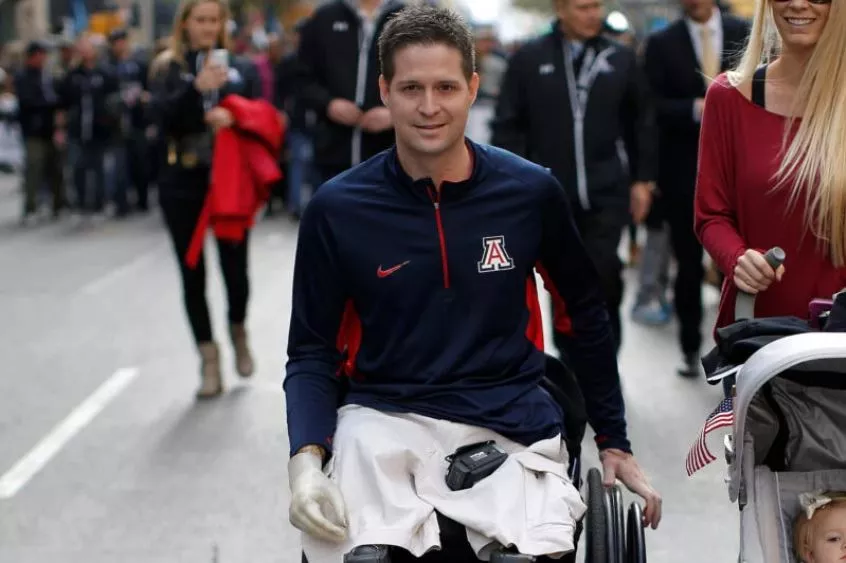
A ban from Facebook has apparently done little to slow Brian Kolfage, charged last month for defrauding thousands in a “build the wall” effort, and who regularly uses personal attacks and misinformation to sic his online following on perceived detractors.
This article is co-published with The Texas Tribune, a nonprofit, nonpartisan local newsroom that informs and engages with Texans. Sign up for The Brief weekly to get up to speed on their essential coverage of Texas issues.
War hero. Veterans advocate. Family man.
It was an image years in the making. Brian Kolfage had lost three limbs in an Iraq bomb blast in 2004, making him the most badly wounded airman to survive the war. He had become a motivational speaker, was the subject of sympathetic news profiles and was even a guest at former President Barack Obama’s State of the Union address in 2012.
Tags: proud boys , trump , biden , debate , white supremacists , Image

